Home Blog Page 72

Fukushima Back in the News – The Raw Food Radiation Connection

Fukushima Radiation Has Now Reached the U.S., Canada & Mexico!

Fukushima Reactor #2 Pressure Vessel Breached, Rising to “Unimaginable” Levels of Radiation. Latest Radiation levels at Fukushima are now the highest since the original 2011 meltdown — and now has crossed the Pacific to reach our own shores! Learn the latest news — and what you can down at home to help your body cope with this disaster. Read more to learn how raw food protects you from radiation.

  • Radiation levels inside the damaged reactors at the Fukushima Daiichi nuclear power station are at their highest since the plant suffered a triple meltdown.
  • Recent readings described by some experts as “unimaginable”, are far higher than the previous record of 73 sieverts an hour.
  • A single dose of one sievert is enough to cause radiation sickness and nausea; 5 sieverts would kill half those exposed within a month and a single dose of 10 sieverts would prove fatal within weeks.
  • In the official reports they actually admit that they don’t know where the core actually is!
Now Japan plans to dump 920,000 tons of nuclear waste into the Pacific!

Radiactive Waste in OceanJapan has been illegally dumping nuclear waste into the ocean for many years. But now, with the three crippled Fukushima reactors still leaking highly radioactive water into the ocean, Fukushima’s radiation has reached the U.S., Canada, and Mexico. So Japan is now officially planning to dump Fukushima’s waste products into the ocean because they just can’t keep up. Robots sent to assess the damage have been destroyed by the radiation so it’s hard to get accurate information. One camera lasted long enough to show molten debris has burned through the bottom of the reactor and is leaking radioactive material into the groundwater.

Alkalize your Body for Natural Radiation Protection

I personally extend my prayers and sympathies to all who are still suffering from the earthquake, tsunami and nuclear disaster in Japan. I have been asked many times now about what we can do to protect ourselves from the radiation risks that now faces much of the planet – because we are all affected by this tragedy!

The Good News

There is a profound connection between alkaline-forming raw foods, alkaline mineral water and ionizing radiation. You see, ionizing radiation does the same thing to your body cooked, processed, acid-forming foods do only much, much faster and more deadly. Simply put, ionizing radiation scavenges electrons from the molecules of healthy cells in the same way that the free radicals in cooked, processed food does. The acidic toxins caused by cooked, processed foods will slowly kill you. The results from ionizing radiation are often much faster and more deadly but the principle is the same — raw food protects you from radiation!

The first, most basic thing you can start doing right now is to start drinking ionized alkaline water, also called alkaline mineral water, made with a water Ionizer. You can even build your own — get instructions at the link below. The second most important thing you can do is to eat more alkalizing raw food protects you from radiation!

Ionized water and alkalizing raw foods are among the best ways to alkalize your body and help protect it from the effects of ionizing radiation! Drinking ionized water, which is made up of microclustered or structured water, also improves hydration, which improves the absorption and effectiveness of the supplements or nutritional products you should also be using for radiation protection.

Nuclear energy expert Dr Helen Caldicott tells the truth about Fukushima and nuclear energy that you won’t see on TV. 

Here’s the thing – the fallout from Fukushima is going to get worse long before it gets better … probably for years or decades. Supplements are important but are only a short-term solutions. For the long-term you need to discover a whole new, healthier way of life with built-in protection against ionizing radiation – and that starts with alkalizing everything you eat and drink — with fresh, whole and organic raw food!

This is just the beginning

All the Fukushima reactor cores are seriously damaged. Since it can take up to 100 years before the spent fuel rods at Fukushima to cool enough for removal, this means that we will all share this disaster with Japan for another century!

Reactor Core No. 3 is the one with an extremely dangerous MOX core that’s two million times more deadly than regular enriched uranium. If this reactor is breached it doesn’t even matter what happens to the other reactors at Fukushima! With Fukishima’s 1,760 tons of nuclear fuel, compared to the mere 180 tons at Chernobyl, Fukushima is destined to dwarf the Chernobyl disaster!

Today, radiation from the Fukushima has been detected in the Pacific Ocean off North America, Canada and Mexico! In the end, this radiation will end up in your food and water. If you have to choose between toxic GMO foods and food that glows in the dark, suddenly GMO’s may not look so bad!

My raw food friends on the west coast are really worried. Of course, in the U.S. the FDA and USDA have different priorities the rest of us. In California, if your raw milk starts glowing in the dark the FDA were would probably seize it – not because it’s radioactive but because it is “raw.”  The FDA is more worried about milk being raw than it is worried about the iodine or cesium isotopes that may be in it!  Not only is your government unconcerned about irradiation of food, they actually encourage it for sterilization! Apparently our government believes a little radiation is actually good for you!

Today in America, government-approved radiation devices are nuking you every day. The government believes that low exposure to radiation is not harmful to your health. But because the effects of radiation exposure accumulate over a lifetime, I believe there are no truly “safe” levels. So the real danger is from the total, never-ending exposure to low levels of ionizing radiation that we accumulate over a whole lifetime from:

  • Any sea foods, including fish and sea vegetables, exposed to the millions of gallons of radioactive waste water being dumped into the pacific daily at Fukushima
  • Eating radioactive particles that fell from the air onto our food
  • Eating food that’s woven into its tissues the radioactive particles in water and soil
  • Eating herbs and other foods that have been irradiated for longer shelf life and against microorganisms
  • Flying – an airplane flight from coast to coast exposes you to hundreds of millirads
  • Airport security scanners ( alow dose but part of the total)
  • Medical x-rays including mammograms, dental x-rays, CAT scans , etc.
  • Radiation “therapy” for cancer
  • Microwave Ovens
  • High-voltage power lines
  • Microwave radiation from cell phones
From Russia with Love

Though Japan refined and popularized water ionizer technology, it was actually the Russians that did the early research and development starting over 75 years ago. When they discovered that negative ions were good for human health they realized that the opposite must also be true — positive ions are bad for human health. Next they theorized that adding negative ions to water could be very healthy.  The ionized water they invented is one of Russia’s greatest scientific achievements and a gift to the whole world for which we should all be thankful, though it has gone mostly unrecognized despite the worldwide popularity that water ionizers enjoy today.

Though hidden from the west by the Soviet Union for decades, the Russians have been studying water ionizer technology for radiation exposure for 50 years! The reason has to do with the Soviets secret nuclear programs. You see, the Soviets had numerous nuclear disasters in Russia that we didn’t know about until the mid 1990s!  So they were secretly pursuing protocols for the treatment of radiation exposure, including the use of ionized water.

The most significant of these projects we now know about was called the Chelyabinsk Project, created by Vladimir Egov in the 1960’s. Chelyabinsk is one of the most remote places in the former Soviet Union. Due to several nuclear incidents in that area, more than 500,000 people have suffered as much as 20 times the radiation exposure as created by Chernobyl. Chelyabinsk it is now called, “The Most Contaminated Spot on the Planet. ” I suspect this title may be going to Fukushima if something doesn’t change soon.

One of the things they wanted to find out in the Chelyabinsk Project is whether ionized water could protect the body from the ionizing effects of radiation. The answer was YES! Just like they discovered in Russia decades ago, you can use ionized water, or alkaline mineral water, to effectively help protect your body from the effects of ionizing radiation. For one of the best water ionizers I have personally used, check out Life Water Ionizers.

Protection from Ionizing Radiation

To protect yourself from Iodine-131 take 5 kelp tablets daily. The body will absorb the kelp instead of the Ioidine-131.

To protect yourself from cesium-137 eat plenty of high-potassium raw foods. Potassium inhibits cesium uptake in he body. Foods high in potassium include avocados, sea vegetable, and leafy green vegetables.

To protect yourself from plutonium eat lots of dulse and veggies that contain plenty of iron like spirulina, bluegreen algae and chlorella, which contains more iron than red meat. Miso has also been shown to have a protective effect. I eat raw, organic dark leafy greens like kale and spinach every day, plus at least one avocado! I put a mix of spirulina, bluegreen algae and chlorella in my smoothies daily.

Alkalizing raw foods are high in antioxidants, helping the body cope with radioactive elements that cause anti-oxidant depletion which leads to health problems.

Radioactive contamination becomes more concentrated higher on the food chain, so vegan raw food assures you of eating low on the food chain – a basic principle for health in general as well as radiation protection. A Raw food, plant-based diet, low on the food chain, is the healthiest diet now more than ever!

Natural Remedies for Radiation Exposure
1. Nascent Iodine

One of the most bio-available forms of iodine, it helps counteract the effects of radioactive Iodine and may be effective in  lowering accumulated and stored radioactive toxins in the thyroid.

2. Potassium Orotate

A radioactive isotope of cesium known as Cesium-137 can also be formed as bi-product of nuclear fission. Potassium orotates can prevent the accumulation of Cesium-137. In fact, getting enough potassium from food such as bananas is a good first step at preventing radioactive cesium 137 retention. However potassium in the diet may not be enough so supplementing with Potassium Orotate is the best for radiation exposure.

3. Calcium and Magnesium
These essential minerals can decontaminate Strontium 90, lowering Strontium absorption by up to 90 percent.
4. Dimethylsulfoxide (DMSO)

Dimethylsulfoxide is an antioxidant sulphur compound that detoxifies and protects the body from the effects of radiation. It also neutralizes exposure from radio-isotopes. Animal studies have shown that rats exposed to x-ray radiation could be protected from the negative effects of the exposure via the intake of DMSO. This chemical could at least partially protect the rats by halting the typical toxicant reactions associated with radiation. Another study from the School of Medicine at the Yokohama City University in Japan found that DMSO offered protective effects for cell destruction, as well as DNA aberrations, in mice exposed to radioactive substances.

5. Zeolites

Nuclear waste is typically “cleaned” or “stored” in the environment by mixing it with Zeolite clay and packing it underground. Zeolites can attach themselves to and remove nuclear waste from the cellular level. In fact, one European study found that Zeolite clay was an effective decontaminate for animals affected by the nuclear waste disaster in Chemobyl. Zeolite clay can also be taken internally for detoxing radiation. Perhaps the best evidence proving that Zeolite helps detoxification of radiation was its widespread usage in the nuclear meltdowns at Three Mile Island, Chernobyl, and the British Nuclear Fuels (BNF), where it was used to absorb radioactive strontium and cesium – 137 from walls and floors. Similarly, the United States’ nuclear weapons facilities use Zeolite clay to line walls and floors to prevent toxicity.

6. Other clays

Several kinds of clays can bond to nuclear waste in the body, including Kaolin, Red Clay, Bentonite, Fuller’s Earth, Montmorillonite. French Green Clay is another clay with the ability to detox radiation, toxic metals and chemical residues. In the former Soviet Union they added this type of clay to chocolate bars that were  given to citizens to help them remove radioactive waste from their systems.

7. Activated Charcoal

Studies have shown that charcoal possesses the unique ability to neutralize radiation, and that 10 grams of charcoal can neutralize up to 7 grams of material.

8. Papain

Papain is a cysteine hydrolase extracted from papaya fruit prized for the ability to reduce toxins. IOne laboratory study on rats found  supplementing with papain could help them survive a lethal amount of radiation, whereas control rats did not survive.

9. Bee Pollen

Initial evidence suggests that bee pollen may significantly lower the negative side effects of radiation exposure, in particular that of radium, x-rays and cobalt-60 radiotherapy. Because exposure to radiation lowers many of your body’s natural vital substances like white and red blood cells and antibodies, bee pollen is a natural way of boosting these vital functions.

10. Beets

Beets help the body rebuild radiation-damaged hemoglobin. In fact, animal studies have shown that rats on a diet heavy in beet pulp were able to more effectively reduce the effects of radioactive cesium-137 than rats who did not eat beets.

11. Cold-pressed Organic Vegetable Oils

Oils like sesame oil, extra virgin olive oil and coconut oil also help pull radiation out of the body. The lipids in the oils bind the toxins, and protect cellular membranes. Studies on mice exposed to x-rays found that the mice can survive if they are given oil. Another study on mice found that olive oil could protect the mice against high amounts of x-rays ranging from 300 to 2,400 roentgens.

12. Brewers Yeast

Sources recommend using organic Brewers use for prevention against radiation exposure. In terms of amount, 5 mg. to 15 mg. should be given to children, and 25 mg. to 50 mg. can be given to adults. For cases of direct exposure, these amounts can be doubled, or tripled. Brewer’s yeast can also aid the body in repair after exposure as well as protection.

13. Germanium-132

When we are exposed to radiation, the rays from this exposure release harmful electrons the kill blood cells (hemoglobin). Organic geranium can grab up these radioactive emissions letting them to move freely within the the Germanium instead of entering our human cells and bloodstream. This is related to geranium’s ability to protect the amino acid cysteine in the body. Other studies showed a strong link between germanium-132 and a powerful reduction in death of cells exposed to cesium-137 and gamma rays. Japanese  recommend about 100 mg. per day.

Selected References

  1. Repine JE, Pfenninger OW, Talmage DW, Berger EM, Pettijohn DE. Dimethyl sulfoxide prevents DNA nicking mediated by ionizing radiation or iron/hydrogen peroxide-generated hydroxyl radical. Proc Natl Acad Sci U S A. 1981 Feb;78(2):1001-3.
  2. Abok K, Rundquist I, Forsberg B, Brunk U. Dimethylsulfoxide increases the survival and lysosomal stability of mouse peritoneal macrophages exposed to low-LET ionizing radiation and/or ionic iron in culture. Virchows Arch B Cell Pathol Incl Mol Pathol.
  3. Watanabe M, Suzuki M, Suzuki K, Hayakawa Y, Miyazaki T. Radioprotective effects of dimethyl sulfoxide in golden hamster embryo cells exposed to gamma rays at 77 K. II. Protection from lethal, chromosomal, and DNA damage. Radiat Res. 1990 Oct;124(1):73-8.
  4. Buck AC, Cox R, Rees RW, Ebeling L, John A. Treatment of outflow tract obstruction due to benign prostatic hyperplasia with the pollen extract, cernilton. A double-blind, placebo-controlled study. Br J Urol. 1990 Oct;66(4):398-404.
  5. Kenneth R. Markham, Maria Campos. 7- and 8-O-methylherbacetin-3-O-sophorosides from bee pollens and some structure/activity observations. Phytochemistry. 1996 November. vol. 43 issue 4 pp. 763-767.
  6. Brown SL, Kolozsvary A, Liu J, Jenrow KA, Ryu S, Kim JH. Antioxidant diet supplementation starting 24 hours after exposure reduces radiation lethality. Radiat Res. 2010 Apr;173(4):462-8.
  7. Nesterenko, A. B., Nesterenko, V. B. and Yablokov, A. V. (2009), Chapter II. Consequences of the Chernobyl Catastrophe for Public Health. Annals of the New York Academy of Sciences, 1181: 31 – 220. doi: 10.1111/j.1749-6632.2009.04822.x
  8. Nesterenko, A. V., Nesterenko, V. B. and Yablokov, A. V. (2009), Chapter IV. Radiation Protection after the Chernobyl Catastrophe. Annals of the New York Academy of Sciences, 1181: 287 – 327. doi: 10.1111/j.1749-6632.2009.04836.x
  9. Okunieff P, Swarts S, Keng P, Sun W, Wang W, Kim J, Yang S, Zhang H, Liu C, Williams JP, Huser AK, Zhang L. Antioxidants reduce consequences of radiation exposure. Adv Exp Med Biol. 2008;614:165-78. Review.
  10. Yablokov, A. V., Nesterenko, V. B. and Nesterenko, A. V. (2009), Chapter III. Consequences of the Chernobyl Catastrophe for the Environment. Annals of the New York Academy of Sciences, 1181: 221 – 286. doi: 10.1111/j.1749-6632.2009.04830.

Also Read:

Are You Eating Raw, Live Food But Drinking Dead, Lifeless Water?

The World’s Best Juicers from Super Angel

Click Shop Now to Save $30.00 with my WORLDS-BEST coupon!

Super Angel – the World’s Best Juicers, feature a totally revolutionary twin gear design. You’ll never see another twin gear design like this — developed to be the most efficient in the world designed just for the most powerful masticating juicer available!

Super Angel – The World’s Best Juicers
Super Angel - the World's Best Juicers
      • 100% Stainless Steel
      • Easiest juicer to Use & Clean
      • More advanced features ever
      • Does it all from Wheatgrass to Nut Butter
        (with optional nut butter housing)
      • More juice, driest pulp & less foam guaranteed
      • Self-adjusting speed control prevents jams
      • Manual reverse button quickly clears jams
      • Automatic cooling prevents overheating
      • Automatic motor thermal sensor
      • Newly designed main control board

Super Angel – the World’s Best Juicers … I can say that without qualification because it is true. The only thing that may be a little better solely in terms of juicing efficiency is a $2,500 Norwalk “juicer,” which is really a “juice press” and is pretty tedious and messy to use.

This Super Angel’s all stainless steel design combines with the most advanced twin-gear technology to give you the best juicer in the world by any measure! Juicing efficiently means you get more juice – as much as 20-50% more than other juicers. Which means you get much drier pulp. And of course, less foam. That means they have a longer warranty – a full 10 years. And you can be sure it will last even longer than that!

The Super Angel twin gear juicer has long been known for its high quality all .304 stainless steel construction designed for ease of operation, efficiency, reliability and longevity. The Super Angel juices wheatgrass, sprouts, herbs, leafy greens, vegetable and fruits. With the OPTIONAL Grinding Housing you can also make Nut Butters, Soy Bean Juice, Tofu and Frozen Fruit Sorbets. The New 2014-2015 models have major upgrades to the motor, safety sensor, and main control board. These parts have been upgraded and reinforced to comply with the latest U.S. electrical specifications. The following features are also new and improved:

  • Self-adjusting speed control prevents overloading
  • Built-in auto or manual (Plus only) reverse function prevents jamming
  • Automatic cooling system prevents overheating
  • Automatic self-controlling motor thermal sensor
  • Newly designed main control board

A full 3-housepower motor drives powerful gears that are almost twice as long as most other twin-gear juicers, slowly and powerfully squeezing every drop of juice out of your organic fruits and veggies for the most cost effective juicer you can buy. The Super Angel masticates or chews your fruits and veggies at the ideal speed – 82 RPM – slowly squeezing the juice out to minimize oxidation and friction/heat to keep all enzymes and nutrients alive in the juice. It will also make baby food, nut butters, ice cream, etc. like other multi-purpose juicers, but more efficiently and with less oxidation!

The Super Angel Juicer is the world’s most efficient and amazing fruit, vegetable and wheatgrass juicer. Extract juice from celery, carrots, parsley, spinach, wheatgrass, apple, kale, cucumber, ginger, sprouts and any leafy greens! It can also extract from less obvious things such as pine needles and aloe. The low 82 RPM speed protects flavors and high nutritional content from being destroyed by heat and oxidation.

FEATURES:

Super Angel - the World's Best Juicers

  • All Stainless Steel Design

    No plastic, nylon, Lexan or other polycarbonate materials come into contact with your food! The state-of-the-art stainless steel design is always easy to keep clean and hygienic!

  • Antibacterial Stainless Steel Twin Gears
    The Super Angel Juicer’s twin impeller gears are made of the highest quality SUS-304 solid stainless steel. Other twin gears are made of plastics & weaker quality stainless steel that can chip or wear, leaving room for microorganisms
  • ALSO: Get the Super Angel Premium Deluxe model for the best steel in the world – 316 Surgical Grade Stainless Steel Extractor Housing & Gears (select on checkout).
  • 82 RPM Low Speed Technology
    This low rotation speed is ideal for getting the highest quality and most nutritious juice. The slow speed produces little oxidation and heat, which keeps more enzymes intact. The Super Angel Juicer is the lowest rpm twin gear juicer in the market! But just because it rotates slowly does not mean that it makes juice slowly. The Super Angel makes juice quickly, plus you get higher juice yield and drier pulp!
  • 3 HP Masticating Power
    The solid, surgical-grade stainless steel twin gears provide 3 horsepower of power that allows it to break down tough plant cell walls and release the nutrients locked within. The high pressure squeezing and masticating action makes it possible to juice strong fibrous, stringy fruits and vegetables quickly and easily, such as wheatgrass. You’ll enjoy richer color and more full-bodied flavor.
  • 3-Stage Twin Gear System
    Design for maximum extraction efficiently, stage one thoroughly crushes, chews or grinds your fruit and vegetables. Stages two and three apply concentrated pressure while continuing to “chew” your fruits or vegetables creating very dry pulp and as a result – more, healthier juice.
  • Bigger Gears than the Green Power and Green Star Juice
    The twin gears in the Super Angel are bigger and longer than any other twin gear juicer on the market – and are a unique design optimized for the highest juicing efficiency ever!.
  • 3-Stage Screen System
    The Super Angel’s 3-stage juicing screen filters and maximizes your juice yield, resulting in 3 times the amount of juice extracted compared to other juicers.
  • Simplicity
    A single three-stage screen handles fruits, vegetables, and leafy greens. There simply is no need for other screens.
  • Ease of Clean-Up & Operation
    Amazingly powerful yet easy and simple to use and clean. Its newly designed parts make clean-up, assembly and disassembly a snap.
  • No Pulp Adjustment Necessary
    The powerful heavy duty motor always brings maximum squeezing force and produces the highest quantity of juice. There’s no need for adjustable nozzles or switching to different nozzles.
  • Continuous Juicing with Automatic Pulp Ejection
    The twin gear system allows continuous juicing without having to remove pulp.
  • Eliminates Agricultural Chemicals and Toxic Substances
    The twin gears remove more than 90 % of agricultural chemicals and toxic substances from the surface of fruits and vegetables.
  • Super Quiet
    Angels higher wattage motor features a unique cooling system for less strain on the motor, less heat buildup, and increased durability.
  • Wide Range of Capabilities
    The Super Angel Juicer will extract juice from almost anything from carrots and apples to wheatgrass and pine needles.
  • Versatile, Multipurpose Appliance
    Also make delicious soy milk, tofu, meat pate, frozen fruit sorbet, baby food and even nut butter!
  • Automatic Overheat Sensor
    A thermal protection device and anti-jamming automatic reverse offer safe use and peace of mind. The automatic motor thermostat prevents the motor from overheating.
  • 6 Safety Devices
    Automatic Heat Sensor, Extra Rocker Switch, Internal Gear Protection, Reinforcement of Switch Panel, Double Protection of motor and Main Housing Unit, and Screen Housing.
  • Reverse Turning Safety Feature
    Blockages from overload or jamming can easily be cleared with the automatic or manual (Plus only)
    reverse action function.
  • Fan Cooled
    The Super quiet cooling fan prevents motor overheating.
  • Drier Pulp
    The ultra-precision 2-stage twin gear system combined with the powerful heavy duty motor bring the maximum juice extraction possible. You’ll see the difference in the extremely dry pulp when compared to other juicers.
  • Heavy Duty
    Hand-built, precision engineered featuring the highest quality grade stainless steel available.

FREE With Every Super Angel JuicerShop Now Buttob

  • Free Juice Recipe Book, “Juicing Bible”
  • Free Scrubbing Bristle, “Premium Brush”
  • Free Glass Jar for Juice Collecting, “Pyrex Cup“

THE ADVANCED SUPER ANGEL GEAR DESIGN

Super Angel - the World's Best Juicers Stainless GearsSuper Angel – the World’s Best Juicers, features solid stainless steel twin gears with “Shattering Helical Gear Technology.” Invented by Angel with 30 years of experiences, this highly advanced gear design literally crushes plant cell walls, extracting all the nutrients hiding deep inside the cells.

You can easily see how finely the fibers are ground by the more advanced Super Angel gear design.

Just put some pulp into a cup of water and look at the fibers in the water. As you see on the right, the Super Angel’s gears grind the fibers evenly and break the fiber cells of produce, resulting finer particles and extracting more of the the nutrients hiding deep inside the cells. Other brand twin gear juicers can’t match the Angel’s ability to crush the fiber cells of your veggies like this!

In a test report prepared by KAFRI (Korea Advanced Food Research Institute) the Super Angel can extracted almost 3 to 7 times more nourishing, nutritious juice than other brands and about 20 to 30 percent more juice.

Super Angel – the World’s Best Juicers, features a 3-stage twin gear system for efficient juice extraction. Stage one applies concentrated pressure to fruits or vegetables. Stages two and three grind and continuously process fruits or vegetables, producing very dry pulp and as a result – more, healthier juice. In addition to the three-stage twin gear system, the Super Angel’s three-stage screen filters can maximizes pure juice yield resulting in almost 20 to 30% more juice extracted compared to other juicers.

The twin gear system of the Super Angel can extract essential nutrients even from fiber with a size of 5 micron. The essence of juice extraction is to obtain the best nutrients from plants. The gap between the twin gears of the Super Angel Juicer is only 0.1mm, making it possible to extract minute nutrients by crushing the micron-sized particles.

Super Angel’s exclusive twin gear design minimizes the loss of nutrients through the unique triturating twin gear featuring an impeller press system with a low 82 rpm speed generating virtually no heat while thoroughly crushing your fruits and vegetables at the cellular level. The Super Angel Juicer’s slow speed motor prevents oxidation and maintains nutrients and enzyme activity. Keeping more enzymes intact because of less heat and friction. A low-speed rotation system of just 82 rpm preserves almost all the enzymes & nutritional benefits available. In other juicers, nutrients & enzymes in the plants are easily destroyed by frictional heat. The Super Angel features the lowest speed of any twin gear juicer.

The large gears of the Super Angel are over 8+3/8 inches long and unlike others they have no plastic parts, being made entirely of food grade stainless steel (or optional surgical steel). The precision engineering involved in manufacturing these gears offers the ultimate in breakdown of fruit and vegetable fibers and delivers the best possible nutrient extraction. They are a pair of high quality food grade (or surgical grade) stainless steel, horizontal twin gears spaced at a mere 0.1 mm (4/1000 of an inch) apart. There are no blades, rotors or augers. The powerful triturating action of the twin gears crush, grind and juice almost all vegetables, leafy greens, sprouts, wheatgrass, etc.

The Super Angel ‘s gear system is the first extractor gearing system awarded with U.S. patent rights and is the winner of 3 international awards.

SUPER ANGEL TESTIMONIAL
“I was in the market for a new juicer and came across the Angel. I was impressed with its stainless construction but was concerned about the price. $970 to me is a lot of money especially if it doesn’t do any better than what one currently has. Since I already had a centrifugal and a single augur juicer. I decided that I would just reject it at the door. Well as luck would have it, I was out when it arrived. When I got home I found the box at my front door and and decided to take it out of the box and give it a try. The unit was easy to set up and when I got around to drinking the juice, I was pleasantly surprised! The juice was rich in color and the taste was out of this world! I couldn’t believe it. Well, I then made another drink and placed in it some Kale and Parsley. I was surprised again at how easily the unit just sucked those greens down. I didn’t have to sit there and do any plunging whatsoever. Later after consuming those drinks I couldn’t help but notice a most pleasant bodily feeling and knew that it was because of the richness of the juice. I decided right then and there that I would not send the unit back! No way! I am going to take my old juicers and give them away. If you want a juicer that is going to give you more bang for the buck in the product, then the Angel won’t disappoint you.”
— Satisfied Customer, Port Ludlow, WA

Shop Now Buttob

What You Get

Super Angel - the world's best juicers

PRODUCT SPECIFICATIONS:

Additional Specs:

  • Chute Opening : 1.7 inches
  • Twin Gears : 8+3/8 inches Long x 2+3/8 inches Diameter
  • Twin Gears :, Solid Stainless Steel (sus-304) Gears (Optional: 316 Sugical Grade Stainless Steel)
  • Auto Reverse Turning Safety Features : Easily clear the foods if overloaded or jammed.
  • Automatic Overheat Sensor: Automatic motor thermostat prevents the motor from overheating
  • Quiet Operation : Powerful motor with specially designed fan cooling system
  • Juicing Capability : Fruits, vegetables, leafy greens, wheatgrass, sprouts, herbs
  • Versatility : Soy Bean Juice, Tofu, Frozen Fruit Sorbet, Nut Butters
  • Continuous Juicing : Impeller press system of twin gears enables continuous juicing
  • Pulp Ejection : Automatic, continuous by impeller press system of twin gears
  • Machine Operation Time : Suggest 10 Minutes Rest per Every 30 to 40 Minutes of Use
  • Warranty : 10 years on both motors and parts (excluding “Wear & Tear” items)

Centrifugal vs. Masticating Juicers

Centrifugal juicers work at extremely high speeds, can be noisy, produce a lot of heat and expose juice to a lot of air. Heat and oxidation from air will damage enzymes and nutrients. The one advantage of a centrifugal juicer is lower cost. If that’s an issue then buy a centrifugal juicer because ANY FRESH JUICE IS BETTER THAN NO JUICE.

But keep in mind that a masticating juicer eventually pays for itself! You see, a juicer like the Omega VRT330 requires less vegetables because it squeezes out more juice than a centrifugal juicer. I recommend single-auger juicers because of their simplicity, ease of use and the fact that you can clean them in minutes! It’s also nice knowing I’m getting the most from my expensive organic vegetables!

Agricultural Chemicals on fruits and vegetables

Did you know that apples are usually sprayed around 22 times before they reach the store? Or that commercially grown carrots are often used as a crop to “clean” the soil? Do you know where your potatoes, oranges and tomatoes have been?

Unless your fruits and vegetables are organic, they grew up in fields soaked in pesticides and herbicides. Although pesticide residue on fruits and vegetables are considered by the government to be at safe levels for human consumption, do you really want those extra chemicals in your food?

Twin gear juicers get rid of about 80 to 90% of toxic agro-chemicals and heavy metals from produce. This is one of the reasons we recommend that you choose a Super Angel! And always be sure to buy organic produce for juicing unless you want a cocktail of chemicals in your food.

The Super Angel’s Twin Gears have the ability to remove a high level of agricultural chemicals and heavy metals through the triturating and squeezing process. You see, the affinity of the fiber for agricultural chemicals and heavy metals is so high that they remain with the fiber and are discarded. Still, it’s always good to wash your fruits and vegetables before you eat or juice them.

Pesticides used in the production of most crops in the United States may increase your risk for cancer or other chronic diseases and should be limited in your diet. To minimize your exposure to pesticides, buy as much organic produce as possible, wash all fruits and vegetables with water Before eating apples, cucumbers, potatoes or other produce in which the outer skin or peeling is consumed, scrub with a brush. Throw away the outer leaves of leafy vegetables, such as lettuce and cabbage. Peel and cook when appropriate, although some nutrients and fiber may be lost when produce is peeled.

Once your fruits and vegetables were ready for harvest, they were handled by several different pairs of hands in the fields and orchards, then in the warehouses and finally again in your grocery store. Listeria, Salmonella and E. Coli may all be lurking there, whether they’re organically grown or conventionally grown. You need to get those fresh fruits and vegetables in your diet, but not the insects, chemicals and bacteria that come along with them, so make sure you wash your fruits and vegetables before you eat them.

How to Wash Fruits and Vegetables:

Start by keeping your kitchen counter tops, refrigerator, cookware and cutlery clean. Always wash your hands before preparing meals and handling fruits and vegetables. Keep fresh greens, fruits and vegetables away from uncooked meats to avoid cross-contamination. Choose healthy looking, ripe fruits and vegetables when you shop. Avoid bruised, moldy and mushy produce. Wait until just before you eat or prepare your fruits and vegetables to wash them. Fruits and vegetables have natural coatings that keep moisture inside and washing them will make them spoil sooner. Wash all pre-packaged fruits and vegetables, even if the label claims they are pre-washed.

Wash all parts of your fruits and vegetables, even if you don’t plan on eating the rind or peeling. Bacteria living on the outside of oranges, melons and squash can be transferred to the knives that cut them and then straight to the parts that you will be eating. Gently rub fruits and vegetables under running water. Don’t use any soaps, detergents, bleaches or other toxic cleaning chemicals. These chemicals will leave a residue of their own on your produce. Firmer fruits and vegetables like apples and potatoes can be scrubbed with a vegetable brush while rinsing with clean water to remove dirt and residue. Remove and discard the outer leaves of lettuce and cabbage heads and thoroughly rinse the rest of the leaves. Rinse berries and other small fruits thoroughly and allow them to drain in a colander.

Remember that the fruits and vegetables you buy may look clean when you get them at the store, but you can’t see bacteria or chemicals. Your fruits and vegetables still need to be washed. This is especially important for produce and greens that are eaten raw!

Important Tips

Juice A Small Amount of Food at a Time  – To get the best results from your Super Angel, juice a small amount of food at a time — never a whole bunch! A small quantity of food is more easily and efficiently crushed between the rotating gears. Also, the two gears can crush cellulose fibers more easily, breaking up cells in vegetables and fruits thus extracting the nutrients locked inside — minerals, vitamins, enzymes, amino acids and complex carbohydrates. If you insert too much food into the chute the two gears will not be able to break up the individual cells as well. Too much food at one time can also damage the extracting screen housing and cause jams because the motor runs only at 82 rpm. Insert your food little by little, rotating between hard, soft, juicy and leafy vegetables. It’s best to cut your food to an appropriate size to fit into the chute due to its small in diameter.

Cleaning Tips for Motor Bushing – Right after juicing, always clean the surrounding area (white bushing) of motor shaft (where the gears go in). Just spray some water on the white bushing around the motor shaft while lifting the back of the juicer a bit so that the water doesn’t get inside of the white bushing. Do not scrub the bushing with a brush or towel. Then just dry any water around the bushing by gently tapping with soft towel so you don’t damage the little o-ring at the center of the bushing.

Tips for Juicing Carrots – After juicing several carrots you will get a feel for how much pressure you need to use with the pusher. The slowly rotating gears can’t grab carrots easily, so use moderate pressure but not too much. You will need to cut larger carrots to fit into the feeding chute. As long as the diameter of the carrots the chute, all you need to do is cut them to about 5 to 6 inches in length. For large diameter carrots, it will be a lot easier to split them in half lengthwise. Please insert only one piece at a time, waiting for each piece to be crushed completely.

Sensor to Protect the Motor – Please remember that the motor doesn’t work without the extracting housing attached and locked in with the clamp. In order to protect the sensor (magnet) at the bottom of the housing, do not submerge it in water. Just clean the sensor area under the faucet, but don’t soak it in the sink. It is OK submerge the screen of the extracting housing in water.

Rest 10 Min. for Every 30 min. of Juicing – To prevent overheating, rest for ten minutes after you use the juicer for thirty minutes. Also, make sure the fan is working properly. The motor is equipped with an automatic heat sensor to protect it from over heating. If the motor gets too hot,the thermostat will stop the motor. When the temperature of the motor drops down it will start working again.

How to Clean the Screen – Always check the hole of the screen to see if they’re clogged by calcium/mineral deposits from your produce. Clogged holes cause the yield ratio (amount of juice) to fall. You can check the holes under a light. To clean the holes of the screen soak the screen (not the sensor area) in a mixture of baking soda and water over night (2 parts soda to 8 parts water). This loosens the scaling so most of it can be brushed off with bristles. For better results, spray extra baking soda onto the screen while brushing with a brush. Remember NOT to  soak the sensor area of the screen housing in water.

Juicing Soft Fruits – Soft fruits  can be a bit of a challenge because they can clog the holes of the screen with mushy pulp. When juicing citrus, strawberries, grapes  and even cucumber take the time to cut the food into small pieces and feed them into the chute slowly.  It is generally recommended to avoid soft fruits entirely since they generally have too much sugar for most people. When backed up just press & hold the reverse button for 3 to 5 seconds until the back-up clears (Plus model only). Remember to use the wooden pusher with silicone o-ring as opposed to the standard one to avoid splashing. You can minimize juice back up by alternating between soft fruits and carrots while juicing.

Silicone o-rings are provided to seal the edge of the large mouth of the extracting screen housing, minimizing leakage from the lower clamp. The silicone ring is mostly needed for soft fruits, not so much for vegetables, leafy green, etc.

If you juice soft fruits often, we recommend getting the soft fruit screen housing (optional). This is the same size and shape as the standard housing but has bigger holes on the screen.  With the soft fruit screen housing however, you could get a small amount of pulp in the juice.

Click a Tab for Additional Information:

(Insert TABS 1916)

Click here for my Juicer Comparison Chart

Also Read:

https://rawfoodlife.com/shop/super-angel-juicer-special/

How to Choose a Juicer for Raw Foodists!

In general, juicing for raw foodists is best using the slow speed masticating juicers, available from several makers including Samson, Omega, Kuvings, GreenStar, Green Power, Super Angel and many more.

Here are the 2 biggest reasons for this:
  1. Slower machines produce less friction andless heat, preserving enzymes that can be destroyed by heat.
  2. Low RPM machines “masticate” or virtually “chew” the food to squeeze out the juice. High RPM centrifugal juicers spin juice through the air causing juice to be exposed to lots of air — oxidizing the juice. Low RPM juicers don’t expose the juice to air, reducing oxidation and preserving more of the nutrition in the juice.

With a 25 year history, the Champion juicer was probably one of the first low RPM juicers ever. It was, and still is, built like a tank and is great for certain applications, though it doesn’t do wheatgrass. However, it really is an all-around food processor that can also make juice — but isn’t very good at it. First, it is too fast, about 1,750 RPM, causing a bit more oxidation. I also found that they don’t get as much juice out of your veggies, leaving the pup rather wet. So today there are many better juicers that are much, much slower — as low as 45 rpm, and much more efficient at highly quality juicing with little if any oxidation.

You see, high speed juicing tosses your juice through the air to be separated by a high speed centrifuge while you are making it, which means it gets a lot of oxidation. Oxidation is the enemy of your juice! So juice from a centrifugal juicer needs to be consumed within an hour or so of making it or it will start tasting nasty. It’s still a great healthy drink, but mostly when it is freshly made.

In a slow speed juicer, there is hardly any air mixed in the juice while you are making it — which means little or no oxidation. You can drink this juice as much as 2 or 3 DAYS after you made it and it will still taste great! So if you make enough juice for 2 or 3 days it will still taste fresh, and you only need to clean you juicer once!

The first juicer I used for many years was a Samson Juicer. I think it is still the best value for the money and the easiest to clean of the many juicers I have personally used over my 25 or so years as a raw foodist. Twin-gear juicers like the  GreenStar Elite are more efficient at getting the juice out — so you get more juice and drier pulp. However, the extra cleanup may not be worth the extra price for some folks. The Samson is so easy to use and clean that you can use it daily without a problem! Very similar to Samson Juicers are the Omega Single Auger Juicers  for a similar price.

When juicing with a single auger juicer like the Samson, I like to cut hard veggies and fruits up a bit to make them easier to put through the machine. I also alternate between soft fruits or leafy veggies and the hard stuff. The Samson has a harder time with carrots than anything else, even wheatgrass – but it still does them and again, I am willing to put up with a little less juicing efficiency for the convenience of the Samson. I don’t use more than one or two carrots in a glass of vegetable juice anyway because of the sugar content – and neither should you! Try to avoid having a glass of just carrot juice – there is far too much sugar in carrots for most people! If you already know that you have some hypoglemic tendencies, then avoid carrots altogether.

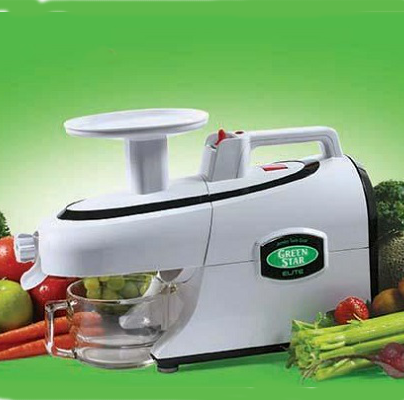
Greenstar Elite JuicerThe favorite versions of the twin gear juicer are the Omega TWM30S and the GreenStar Elite. This are among the best of the twin-gear triturating juicers. Twin-gear juicers are more expensive and generally harder to clean than a single auger, but these are the really not that hard to clean. Also, these models are better for hard produce like carrots, are built very solidly and have a longer warranty.

Which is REALLY a better juicer? To me the answer is the one I will actually use regularly!

One of the nice things about all low RPM juicers is that you can run the pulp that comes out back through the machine a second time to extract more juice, This is a particularly good idea with the Samson or Omega juicers and radically improves it’s efficiency. On the other hand, if you choose to re-use the pulp in a raw recipe, then it is nice to leave the pulp a little wet because it will keep more nutrition and flavor in the pulp for other recipes.

Most of the low RPM juicers I have tried have trouble with very soft fruits or veggies, since they have little fiber to help them move through the unit. However, I can’t think of a single time I juice nothing but a bushel of tomatoes or oranges. With veggies, you are usually mixing some soft veggies, leafy veggies and hard veggies together, and alternating the hard with the soft handles this problem nicely. The Samson works great with watermelon, with rind and seeds, no problem. The Green Star will juice just about anything. Personally, I prefer to use fruits to make smoothies in my Vita-Mix rather than juice them, but occasionally I make my own organic raw apple juice to use in a smoothie.

One of my favorite things to make is to make with a low rpm juicer is “raw ice cream.” .” You just feed frozen fruits through the juicer. I start with frozen bananas as a base for any flavor, then may add blueberries or strawberries, or maybe some frozen mango.  The absolute best juice for this in my opinion is the venerable Champion, using its “blank plate” or “solid plate” instead of the juicing screen. All the low rpm juicers make raw ice cream adequately, however.

In the mid-price range there are a number of very good vertical slow speed juicers that became available in recent years. Their main advantage over horizontal models is that they take uop much less counter space — but that’s about all they offer. And they are not recommended if you want to do leafy green like spinach or kale.

The Kuvings Slow Juicer features a large3-inch diameter feeding chute How to Choose the Right Juicer for You - Chompy Charliethat can take in a whole apple. It is a solid and good quality juicer.If you know and trust Omega, their vertical juicers are a no brainer.

Omega verticalHurom vertical juicers are comparable in quality to Omegas — and are actually made in the same factory, though with some cosmetic differences. The Omega version often has a better warranty as they are a highly respected US company that’s been around for awhile.

Super Angel JuicerThe Cadillac of twin gear juicers to me is the all stainless steel Super Angel juicer. The Super Angel Plus is the base model, that I usually recommend (about $1,250.00), though they  have more expensive models as well — even one that uses surgical grade steel.

Some of these juicers claim to make nut betters as well. They do a so-so job at that, in my opinion. I have an inexpensive “bullet” type blender sitting right on top of the counter at all times, which is great for quickly making nut butters, salad dressings and, when traveling, even smoothies. They can produce a little more heat, so you have to be careful, using them in short burst to keep heat down to a minimum. But they are so much faster that I personally think the speed compensates for that to some extent, and they work better for things like nut butters or grinding spices.

The last option to consider for the idealist — or people with more serious health challenges like advanced cancers, is the hydraulic juice press. The most well-known is the Norwalk Juicer, which sells for around $2,500.00. While these offer the lowest oxidation and highest efficiency of any other juicer, they require a very cumbersome 2-stage juicing procedure that’s cumbersome to use on a regular basis. Without more motivation like a serious illness you are better off getting a juicer that you are more likely to use regularly, like the Super Angel or GreenStar Elite.

A juice press does get the most juice from your expensive organic produce, however, as you can see from the Juice Stability Study, the single and twin-gear juicers are pretty close. In my opinion, it isn’t worth the difference.

In addition, if you already have a Samson, Omega, GreenStar or Super Angel you can buy an inexpensive manual juice press for about $3-400.00 to supplement your own juicer if you really think you need it. This however may be a lot more work than yu think given the additional cost of the electric juicer you need to use with it. However, this option lets you just take the pulp that comes from your electric juicer and squeeze even more high-quality juice out of it. However, there is a lot more cleanup so in my opinion it is really only for the most dedicated juice lovers or folks with a significant health challenge.

The bottom line is that the best juicer is the one that meets your budget and your needs!

Over the last few decades I have owned a Champion, a couple of centrifugal juicers, a Samson/Omega, a GreenStar Elite and a Super Angel. Ultimately, I was able to get great juice out of ALL of them and to juice about anything I wanted.

CLICK HERE to see my Juicer Comparison Chart for more details on the most common low RPM juicers on the market today.

Originally published April, 2010. Updated March, 2017.

Also Read:

Introduction to Juicing for the Raw Food Lifestyle

Nature’s First Raw Superfood Can Transform Your Health!

How the Oldest & Smallest Form of Life on Earth Can Transform your Health!

“The health benefits of Aphanizomenon flos-aquae (AFA) blue green algae have been reported for more than two decades, yet it is only recently that science has revealed the mechanisms by which AFA acts on the body, and the astonishing health benefits of AFA. AFA contains a wide variety of phytonutrients that promote health, such as chlorophyll, carotenoids and polyunsaturated fatty acids. AFA contains unique molecules that modulate various aspects of human health…”  — ChristianDrapeau, MSC, Primordial Food

Life began in the sea 4 billion years ago. Fossil records blue green algaeindicate that the blue-green algae is the most primitive of the 1,000 or so different algae varieties on earth, dating back over four billion years. Blue green algae has managed to survive all that time while millions of other plant and animal species became extinct. What makes blue-green algaes so powerful and amazing for human health is the same super-dense nutrition and energy that we can now harvest and enjoy for maximizing our human potential.

In evolutionary terms, blue-green algaes were probably the very first organisms to release oxygen into the prehistoric Earth’s atmosphere. Blue-green algaes are also a missing link – a single cell organism that is part bacteria and part plant in some ways, representing the evolution from plant to animal. First, blue green algaes can do photosynthesis like plants, but they do it better making them the best sources of chlorophyll – a super food in its own right. Blue-green algaes are similar to animal cells because they have a soft, digestible cell wall made of glycogen, which our bodies can use as a food. Many other plants have cellulose cell walls making them very difficult to digest. So blue-green algae has more bio-available nutrients plus tons of chlorophyll, making them one of the most nutritionally-dense super foods available. And of course, it is also a raw food!

klamath lake, blue green algaeWild blue green algae (Aphanizomenon flos-aquae or AFA) from Klamath Lake, Oregon is unique even compared to other blue-green algaes. It is one of the only algaes that can be harvested in the wild from the Klamath Lake, one of the richest sources of nutrition in the world. Many other algaes are grown artificially in man-made ponds, but the nutritionally-dense, natural environment of Klamath Lake is impossible to re-create on a farm. So this wild blue-green algae is free of chemicals or toxic pollutants. Because AFA is so pure, it has the most benefits for human nutrition and health.

The best source of AFA I know of is e3Live Blue-Green Algae because they carefully harvest their AFA in the wild from the deepest and purest sources on the lake, then quickly flash-freeze the algae and ship it frozen right to your home in 2 days – for free! That makes E3Live AFA the fresh, most natural and most powerful super food you can get anywhere. This is not just my opinion, but is a fact backed by many health experts and a lot of scientific literature (please see my References Tab below).


Known Health Benefits

“The greatest benefit of bringing this nutrient-dense wild food into your life is not simply its nutrient concentration, but rather its total synergistic effect on the mind and nervous system including the pituitary, pineal, and hypothalamus. Because our brain cells use neuropeptides to communicate, and Blue-Green Algae contains the basic building blocks and neuropeptide precursors necessary to create these potent brain chemistries, Blue-Green Algae contributes to the brain’s ability to process information and achieve a sense of well-being in the user.”
— Dr. Gabriel Cousens, M.D.

For most people, the brain is the most under-nourished part of the body. Although it makes up just 2% of your body weight it uses 20% of your energy! Blue-green algae metabolizes molecular nitrogen directly from the air, allowing the biosynthesis of “low molecular weight peptides” that are precursors of the neurotransmitters used by the brain to influence many metabolic functions. Neurotransmitters are a chemical link that lets neurons communicate. The ability of the brain to do all this is highly dependent on the meal you just finished! This is because the ability of the brain to manufacture neurotransmitters is controlled by the amount of amino acids in the bloodstream. Some of the amino acids in blue-green algae have actually been found to cross the blood-brain barrier where they are used to build neurotransmitters and influence other metabolic functions.

Although hundreds of times smaller than the cells of the plant or animal kingdoms, blue green algae cells are packed with more nutrients than other foods with much large cellular structures – a total of 64. Blue green algae also contains about 3% nucleic acids, more than any other food! Nucleic acids contribute to the growth, repair and regeneration of cells, enhance immunity, support memory and act as stress modulators. Blue green algae is also high in the same proteins the human body needs for optimum cell growth, repair and nutrition. These proteins are also “glyco-proteins ,” which means they can be used by the body directly with virtually no digestion, making them super absorbable by the body.

Next to water, protein is the most abundant substance in a healthy human body. Proteins are made up of amino acids, which are the building blocks of the body. Proteins comprise 90% of the hemoglobin and form the backbone of the body’s immune system. AFA contains more protein than any other organism — plant or animal, including 22 amino acids, 8 of which are “essential,” which means we must get them from food. What is really amazing about blue green algae is that its amino acid profile is almost identical to the amino acid profile of the human body — making it one of nature’s most perfect foods!

The Highest Source of chlorophyll

klamath lake blue green algaeChlorophyll is a one of the most important ingredients in blue-algae. It is like the “blood” of the plant, serving a similar purpose to hemoglobin in our blood, which is carries oxygen throughout our bodies. Oxygen is the magic key to live, raw nutrition and chlorophyll is the most important nutrient for increasing the bio-available oxygen in your system. Chlorophyll is also to the proper absorption of amino acids. AFA blue-green algae is the highest known source of chlorophyll.

CHLOROPHYLL CONTENT
(per 10 grams)*

AFA Blue Green Algae 300 mg

Spirulina 115 mg

Chlorella 280 mg

Barley Grass 149 mg

Wheat Grass 55mg

Actual chlorophyll content is dependent on variables like time of year & environmental factors.
Vitamins & Minerals

Vitamins and minerals are essential to human life. They are necessary in small amounts to promote growth and maintenance of your health. They are needed to transform food into energy for the body. However, without minerals, vitamins have no function. AFA blue-green algae contains a complete balance of vitamins (except D and E) and almost every organic mineral in trace amounts. Spending time in the sun provides plenty of vitamin D, and eating high chlorophyll foods lie AFA blue green algae helps your body produce vitamin E.

Beta Carotene

Beta-carotene is the “pre-cursor” to Vitamin A. Your body converts beta-carotene into Vitamin A. The beta-carotene in AFA is one of the most powerful antioxidants known. It may actually be the most important nutrient for enhancing your immune system. However, the spectacular healing benefits of beta-carotene are require other carotenoids to work. AFA blue green algae contains dozens of carotenoids that can neutralize dangerous free radicals. Leading disease researcher throughout the world have proven in many studies that beta-carotene can lower incidence of degenerative disease.

Pure, Live Water

Over 70% of our body is water yet most of drink tap water or bottled water (purified tap water mostly) without a second thought, which contains chlorine, toxic chemicals, bacteria, pharmaceutical drug residues and other carcinogens. You may even struggle daily to eat as much live, organic raw food as you can – yet take what you drink for granted. For a raw foodist, live high pH alkaline water is just as important as live, alkaline-forming raw food! Water is also, of course, necessary for everything from digestion and regulation of body temperature to elimination of toxins and circulation of fluids like blood and lymph.

Like most live foods, AFA blue green algae is made up mostly of living, alkaline mineral water which not only zaps its dense nutrition into your body but includes the high energy, electron-rich alkaline minerals and vitamins fund in AFA. Remember, your body needs a minimum of 1/2 ounce of pure water, per pound of body weight, per day, so in addition to eating live, water-rich raw foods be sure to drink plenty of high pH alkaline mineral water – most easily available from a water ionizer, though you can also alkalize water using highly concentrated mineral drops and other related products.

Major Nutrients in AFA/Blue-Green algae
  • VITAMIN B1 – Thiamine 4.70mcg* A protein builder that helps give hair shine, volume and good texture. Enhances circulation to bring nutrients to the scalp and nails.
  • VITAMIN B2 – Riboflavin 57.30mcg* Stimulates health and growth of hair, nails, skin cells. Helps eyes by bringing oxygen to body tissues. Can help eliminate dandruff. May aid in preventing hair loss.
  • VITAMIN B3 -Niacin .065mg* Supports healthy hair, nail and skin by aiding in digestion and improving circulation.
  • VITAMIN B5 – Pantothenic Acid 130.00mcg* Helps produce full, healthy hair and stronger nails by stimulating vitamin utilization and releasing energy from food. With Folic Acid, it can help to restore your hair’s natural color and may aid in preventing hair loss.
  • VITAMIN B6 – Pyridoxine 11.10mcg* Supports the growth of red blood cells that are important for healthy hair, scalp, and nail maintenance. Helps prevent dandruff. May aid in preventing hair loss.
  • VITAMIN B12 – Cobalamine 8.00mcg* Stimulates health and growth of hair, nails, skin cells. Helps eyes by bringing oxygen to body tissues. Can help eliminate dandruff. May aid in preventing hair loss.
  • FOLIC ACID 1.00mcg* Helps maintain healthy hair, nails and skin. May aid in preventing hair loss. With Pantothenic acid, may delay graying of hair.
  • VITAMIN C – 6.70mg* Supports hair and nail growth by improving circulation. Useful as treating dandruff. May aid in preventing hair loss.
  • VITAMIN E – Tocopherol 1.70iu* Key to hair health, nail growth and supple skin by supplying oxygen to the body and improving circulation. Helps combat dandruff. May aid in preventing hair loss.
  • COPPER 4.30mcg* Necessary for healthy hair, stronger nails. An important anti-graying agent.
  • IRON 350.70mcg* Helps maintain healthy hair, nails and skin tone. May aid in preventing hair loss.
  • SELENIUM 0.67mcg* Helps in treatment and prevention of dandruff. Necessary for healthy hair and nails. May also increase the elastic youthfulness of the skin and be helpful in removing age spots. When taken in the natural AFA form of selenomethionine, skin cancer incidence from ultraviolet light may also be reduced.
  • SILICON 186.50mcg* This is a useful raw material for strengthening the human skin.
  • ZINC 18.70mcg* Stimulates hair and nail growth. Aids in preventing hair loss. May help treat and prevent dandruff.
  • BIOTIN 0.30mcg* Helps produce healthy-looking hair and nails.
  • LYSINE 35.00mg* An essential amino acid. Along with vitamin E and iron, lysine helps form collagen, an important skin protein.
  • METHIONINE 7.00mg* Methionine is the rarest of the essential amino acids. Its sulfur content makes it important for skin and nail growth.
  • GLYCINE 29.00mg* Glycine is a nonessential amino acid but has many healing properties. It is used orally and in ointments to heal wounds because skin collagen is a protein that requires high amounts of glycine.
  • PROLINE 29.00mg* A nonessential amino acid and a main component of collagen. Proline is helpful in skin, seems to help in wound healing, as does glycine, because proline increases collagen synthesis.
  • SERINE 29.00mg* Serine is needed in the formation of the phospholipids of cell membranes and contributes to “membrane fluidity.” It is good for the skin and has even been used as a natural moisturizer in skin creams.
  • BETACAROTENE 2000iu* Protects the cell membranes and stimulates the growth of new skin cells.
  • CHROMIUM 0.53mg* Helps with acne.
* A amount contained in 1 gram of E3Live™ Aphanizomenon flos-aquae
** These statements are not evaluated by the U.S. Food & Drug Administration. These products, and the information contained at this website, are not intended to treat, cure or prevent any disease. Results may vary.
The Blue Green Algae Lifestyle!

The Standard American Diet (S.A.D.) is mostly highly cooked, refined, processed, genetically modified and nutrient deficient food. It is virtually impossible to eat and stay healthy on the SAD diet. On top of that, our addiction to pesticides and other chemicals like Monsanto’s glyphosate and Roundup have depleted our farmlands of essential micronutrients and are completely contaminated by pesticides and GMO’s (genetically modified organisms). Today, most people can find glyphosate in their own blood!

Most health authorities today agree that many degenerative diseases are caused by poor diet and lifestyle. According to Dr. Stanley S. Bass, N.D., D.C., Ph.C., “The closer the food comes to the natural state in which it occurs, or the closer we come to its raw, uncooked form, the higher its quality is.”

In raw food all the enzymes, vitamins, minerals, amino acids and other nutrients are fresh, alive and fully intact. The amino acids are in their finest, most digestible form. The minerals, vitamins, trace elements, carbohydrates and life force are all still full of life. Eating organic raw fruits, vegetables, nuts and seeds gives your body living nutrients free from chemicals, antibiotics, pesticides, preservatives or GMO’s. AFA blue-green algae is nature’s richest, most basic raw food. It existed at the beginning of time and has enriched evolution for billions of years, providing all living things with perfect nutrition. Today, blue gren algaes like AFA are the beginning of the food chain – so that all life ultimately depends on them. But now you don’t need a middleman, or secondary source, to get the rich nutrition found in AFA – it can all be found in E3Live Blue Green Algae products – fresh frozen and express shipped right to your door for maximum freshness and aliveness. Make AFA the start of your food chain today!

Personally, I highly recommend e3Live Blue-Green Algae. This is the only AFA I know and trust that is live, liquid and delivered to you closest to its natural state. E3Live is harvested by experts from the deepest, most pristine waters of Upper Klamath Lake only at peak times of optimal growth — when the AFA is the healthiest and most vibrant.

The benefits of AFA are directly proportional to the quality of the algae source and Klamath Lake is one of the best — assuring you of the most powerful AFA supplements in the world.


SELECTED REFERENCES

  1. Jensen GS, Ginsberg DI, et al. Consumption of Aphanizomenon flos aquae has rapid effects on the circulation and function of immune cells in humans. JANA. 2000;2(3):50-58.
  2. Qureshi M, Ali R. Spirulina platensis exposure enhances macrophage phagocytic function in cats. Immunopharmacol Immunotoxicol. 1996;18(3):457-463.
  3. Hayashi O, Katoh T, et al. Enhancement of antibody production in mice by dietary Spirulina platensis. J Nutr Sci Vitaminol. 1994;40:431-441.
  4. Qureshi M, Garlich J, et al. Dietary Spirulina platensis enhances humoral and cell-mediated immune function in chickens. Immunopharmacol Immunotoxicol. 1996;18(3):465-476.
  5. Pugh N, Ross SA, ElSohly HN, ElLohly MA, Pasco DS. Isolation of three high molecular weight polysaccharides with potent immunostimulatory activity from Spirulina platensis,Aphanizomenon flos-aquae and Chlorella pyrenoidosa. Planta Medica. In Press.
  6. Hayashi O, Hirahashi T, et al. Class-specific influence of dietary Spirulina platensis on antibody production in mice. J Nutr Sci Vitaminol. 1998;44(6):841-851.
  7. Kim H, Lee E, et al. Inhibitory effect of mast cell-mediated immediate-type allergic reactions in rats by Spirulina. Biochem Pharmacol. 1998;55(7):1071-1076.
  8. Yang H, Lee E, et al. Spirulina platensis inhibits anaphylactic reaction. Life Sci. 1997;61(13):1237-1244.
  9. Gustafson K, Cardellina II J, et al. AIDS-antiviral sulfolipids from cyanobacteria (blue-green algae). J National Cancer Institute.1989;81:1254-1258.
  10. Boyd M. Protein isolated from blue-green algae inactivates HIV. Antimicrob Agents Chemother. 1997;41:1521-1530.
  11. Hayashi K, Hayashi T, et al. A natural sulfated polysaccharide, calcium spirulan, isolated from Spirulina platensis: in vitro and ex vivo evaluation of anti-herpes simplex virus and anti-human immunodeficiency virus activities. AIDS Res Hum Retrovir. 1996;12(15):1463-1471.
  12. Hayashi T, Hayashi K. Calcium spirulan, an inhibitor of enveloped virus replication, from a Blue-Green Alga Spirulina platensis. J Natural Products. 1996;59:83-87.
  13. Ayehunie S, Belay A, et al. Inhibition of HIV-1 replication by an aqueous extract of Spirulina platensis. J Aquir Immun Defic Syndr Hum Retrovirol. 1998;18(1):7-12.
  14. Schaeffer DJ, Krylov VS. Anti-HIV activity of extracts and compounds from algae and cyanobacteria. Ecotoxicology and Environmental Safety. 2000;45:208-227.
  15. Mathew B, Sankaranarayanan R, et al. Evaluation of chemo-prevention of oral cancer with Spirulina fusiformis. Nutr Cancer. 1995;24(2):197-202.
  16. Schwartz J. Shklar G. Regression of experimental hamster cancer by beta carotene and algae extracts. J Oral Maxillofac Surg. 1987;45:510-515.
  17. Schwartz J, Shklar G, et al. Prevention of experimental oral cancer by extracts of Spirulina-Dunaliella algae. Nutr Cancer. 1988;11:127-134.
  18. Mishima T, Murata J, et al. Inhibition of tumor invasion and metastasis by calcium spirulan (Ca-SP), a novel sulfated poly-saccharide derived from a blue-green algae, Spirulina platensis. Clin Exp Metastasis. 1998;16(6):541-550.
  19. Tokuda H, Nishino H, et al. Inhibition of 12-O-tetrade-canoylphorbol-13-acetate promoted mouse skin papilloma by digalactosyl diacylglycerols from the fresh water cyanobacterium Phormidium tenue. Cancer Lett. 1996;104(1):91-95.
  20. Mittal A, Kumar PV, et al. Modulatory potential of Spirulina fusiformis on carcinogen metabolizing enzymes in Swiss albino mice. Phytother Res. 1999;13(2):111-114.
  21. Reddy CM, Bhat VB, et al. Selective inhibition of cyclooxyge-nase-2 by C-phycocyanin, a biliprotein from Spirulina platensis. Biochem Biophys Res Commun. 2000;277(3):599-603.
  22. Bhat VB, Madyastha KM. C-phycocyanin: a potent peroxyl radical scavenger in vivo and in vitro. Biochem Biophys Res Commun. 2000;275(1):20-25.
  23. Vadiraja BB, Gaikwad NW, Madyastha KM. Hepatoprotective effect of C-phycocyanin: protection for carbon tetrachloride and R-(+)-pulegone-mediated hepatotoxicity in rats. Biochem Biophys Res Commun. 1998;249(2):428-431.
  24. Romay C, Ledon N, Gonzalez R. Phycocyanin extract reduces leukotriene B4 levels in arachidonic acid-induced mouse-ear inflammation test. J Pharm Pharmacol. 1999;51(5):641-642.
  25. Gonzalez R, Rodriguez S, et al. Anti-inflammatory activity of phycocyanin extract in acetic acid-induced colitis in rats. Pharmacol Res. 1999;39(1):55-59.
  26. Kushak RI, Drapeau C, Van Cott EM. Favorable effects of blue-green algae Aphanizomenon flos-aquae on rat plasma lipids. JANA. 2000;2(3):59-65.
  27. Kato T, Takemoto K, et al. Effects of Spirulina on dietary hypercholesterolemia in rats. J Jap Soc Nutr Food Science. 1984;37:323-332.
  28. Hori KG, Ishibashi G, et al. Hypocholesterolemic effect of blue-green alga, ishikurage (Nostoc commune) in rats fed atherogenic diet. Plant Foods Hum Nutr. 1994;45:63-70.
  29. Iwata K, Inayama T, et al. Effects of Spirulina platensis on plasma lipoprotein lipase activity in fructose-induced hyper-lipidemic rats. J Nutr Sci and Vitaminology. 1999;36:165-171.
  30. Nakaya N, Honma Y, et al. Cholesterol lowering effect of Spirulina Nutr Rep Int. 1988;37:1329-1337.
  31. Vlad M, Bordas E, Caseanu E, Uza G, Creteanu E, Polinicenco C. Effect of cuprofilin on experimental athero-sclerosis. Biol Trace Elem Res. 1995;48(1):99-109.
  32. Becker E, Jakover B, et al. Clinical and biochemical evaluations of the alga Spirulina with regard to its application in the treatment of obesity: a double blind cross-over study. Nutr Rep Int. 1986;33:565-574.
  33. Takai Y, Hosoyamada Y, et al. Effect of water soluble and water insoluble fractions of Spirulina over serum lipids and glucose resistance of rats. J Jap Soc Nutr Food Science. 1991;44:273-277.
  34. Kushak R, VanCott E, Drapeau C, Winter H. Effect of algae Aphanizomenon flos-aquae on digestive enzyme activity and polyunsaturated fatty acids level in blood plasma. Gastroenterol. 1999;116:A559.
  35. Parada JL, Zulpa de Caire G, et al. Lactic acid bacteria growth promoters from Spirulina platensis. Int J Food Microbiol. 1998;45(3):225-228.
  36. Shastri D, Kumar M, Kumar A. Modulation of lead toxicity by Spirulina fusiformis. Phytother Res. 1999;13(3):258-260.
  37. Kapoor R, Mehta U. Supplementary effect of Spirulina on hematological status of rats during pregnancy and lactation. Plant Foods Hum Nutr. 1998;52(4):315-324.
  38. Valencia A, Walker J. Amulti-axial treatment paradigm for mild traumatic brain injury to achieve reparative functional metaplasticity. 3rd World Congress on Brain Injury, IBIA, Quebec City, June 1999.
  39. Drapeau C, Kushak RI, Van Cott EM, Winter HH. Blue-green alga Aphanizomenon flos-aquae as a source of dietary polyunsaturated fatty acids and a hypocholesterolemic agent in rats. J Am Chem Soc. In press.
Originally published 2012. Updated 2017.

Read More:

The Science of Broccoli — Cruciferous Vegetables May Prevent Cancer

Book Review: Shocking Truths They Never Want You To See

0

Altered Genes, Twisted Truth:
How the Venture to Genetically Engineer Our Food Has Subverted Science, Corrupted Government, and Systematically Deceived the Public

Steven Dricker, authorIn Altered Genes Twisted Truth, author Steven Drucker tells the real truth about GMO foods that “they” don’t want you-to see! Epigenetics is a new branch of genetics that is the most important biological discovery since DNA. Until now it was thought you were stuck with the genes that you were born with. But now we know that your genes have a sort of a dimmer switch that regulates your gene activity up or down or on and off, depending on lifestyle and environmental factors.

In the book, Super Genes: Unlock the Astonishing Power of Your DNA for Optimum Health and Well-Being, co-authored by Deepak Chopra and Rudolph E. Tanzi Ph.D., they wrote:

”Only 5% of disease-related gene mutations are fully deterministic, while 95% can be influenced by diet, behavior, and other environmental conditions. Current models of well-being largely ignore genes, yet studies have shown that a program of positive lifestyle changes alter 4,000 to 5,000 different gene activities.”
—
DEEPAK CHOPRA MD is author of more than 80 books in over 43 languages including many New York Times bestsellers.  DR. RUDOLPH E. TANZI, Ph.D. is Professor of Neurology at Harvard and was one of TIME’s 100 Most Influential People for 2015.

In the book, Steven Druker explains how the U.S. government and biased, well-paid scientists have intentionally misrepresented the facts about GMO’s for over 20 years. Primatologist Jane Goodall said it is “without doubt one of the most important books of the last 50 years.” The book is the result of over 15 years of research showing how GM foods became commercially viable ONLY because the FDA covered up the truth, lied about the facts and violated federal food safety laws by letting them be marketed without ever being actually proven to be safe. If the FDA acknowledged the warnings from their own scientists, GMO’s would have imploded and never have even gotten off the ground.

“This incisive and insightful book is truly outstanding. Not only is it well-reasoned and scientifically solid, it’s a pleasure to read–and a must-read. Through its masterful marshaling of facts, it dispels the cloud of disinformation that has misled people into believing that GE foods have been adequately tested and don’t entail abnormal risk.”
–David Schubert, Ph.D. molecular biologist and Head of Cellular Neurobiology, Salk Institute for Biological Studies

“Altered Genes, Twisted Truth is lucid, illuminating, and alarming. As a former New York City prosecutor, I was shocked to discover how the FDA illegally exempted GE foods from the rigorous testing mandated by federal statute …. I was outraged to learn how America’s children are being callously exposed to experimental foods that were deemed abnormally risky by the FDA’s own experts.”
–Tara-Cook Littman, J.D.

“Steven Druker has written a great book that could well be a milestone in the endeavor to establish a scientifically sound policy on genetically engineered foods. The evidence is comprehensive, clear, and compelling…. No one has documented other cases of irresponsible behavior by government regulators and the scientific establishment nearly as well as Druker documents this one.”
–John Ikerd, Ph.D. Professor Emeritus of Agricultural and Applied Economics, University of Missouri

“Steven Druker’s meticulously documented, well-crafted, and spellbinding narrative should serve as a clarion call to all of us. In particular, his chapter detailing the deadly epidemic of 1989-90 that was linked with a genetically engineered food supplement is especially significant. I and my Mayo Clinic colleagues were active participants in the attempt to identify the cause of this epidemic. Druker provides a comprehensive analysis of all the evidence and also presents new findings from our work. Overall his discussion of this tragic event, as well as its ominous implications, is the most comprehensive, evenly balanced and accurate account that I have read.”-
-Stephen Naylor, PhD CEO and Chairman of MaiHealth Inc., Professor of Biochemistry and Molecular Biology, & Pharmacology Mayo Clinic (1991-2001)

Related Articles::

https://rawfoodlife.com/whatever-you-think-about-monsanto-its-worse/

The Real Purpose of GMO’s — and It’s Not Feeding the World!

Matt Monarch’s Raw Ice Cream

by Matthew Monarch, Jan., 2017
Proprietor, RawFoodWorld.com

Today I’m going to show you how to make the best raw ice cream on the planet. This ain’t no typical banana ice cream… It’s the real deal! One of my best friends used to make raw ice cream and he would sell pints of it at the Ojai Farmer’s Market. He divulged this incredible recipe to me and I am going to share it with you right now! We are going to also make a low glycemic version, which has never been done before!

Original Recipe:

For amazing raw ice cream, blend the following ingredients together in a high-speed blender. Strain mixture through a nut milk bag. Set aside and use pulp for another recipe if you wish.
¾ – 1 c. almonds
¼ c. coconut crystals
3 large medjool dates

After straining, place the mixture back in the blender and add the following:
1 c. coconut meat
3/4 c. coconut butter
½ c. cashews
¾ c. coconut crystals
2 tsp. vanilla powder (optional)

Blend all the ingredients in a high speed blender until you reach your desired consistency. Place in an ice cream maker or a glass container and put in freezer. for delicious raw ice cream! Optional: If in a glass container, stir 2-3 times every 30 minutes for the best consistency.

Low Glycemic Version:

3 ½ c. coconut water
¾-1 c. almonds
¼ c. mesquite powder
1/8 c. carob powder

Blend all ingredients together in a high-speed blender. Strain mixture through a nut milk bag. Set aside and use pulp for another recipe if you wish. Place mixture back in blender. Add the following to the blender:
1 c. frozen coconut meat
1 c. coconut butter
½ c. cashews
2 tsp. vanilla powder (optional)
½ c. mesquite powder
½ c. carob powder

Blend all ingredients in a high-speed blender until you reach desired consistency. Place in an ice cream maker or a glass container and place in freezer. Optional: If in a glass container, stir 2-3 times every 30 minutes for the best consistency.

Which Should I Buy First — a Juicer or Blender?

fresh juice girlA juicer or blender – which should I get first? This is the most common question I am asked wherever I go. Since top-quality masticating juicers and high-speed blenders are expensive, everyone starting a raw food lifestyle is trying to decide whether to invest in a juicer first or a blender. So here is what you need to know to make an informed decision. Remember, when I talk about fruit and vegetables, or any foods, I am talking about USA-grown organic produce!

A Juicer or Blender — Both are Essential to a Raw Food Lifestyle

Comparing a blenders or juicer is like comparing jogging with yoga. They’re both very healthy, yet they’re as different as can be. To get the best health benefit you may want to use both.

The first rule of thumb for everyone on a raw food diet is that you MUST get high, quality, dense, easily absorbable nutrition, whether from juicers or blenders! These days, with our soils so depleted and seeds stock often weaker, its almost impossible to get adequate nutrition just from raw fruits, nuts and vegetables, even when organic. But with the addition of some fresh raw juices and smoothies it becomes easy!

Either a juicer or blender will give you a huge shot of dense nutrition that your body will absorb like a sponge. There are some important differences, but the main thing is that it isn’t a contest – both make a valuable contribution to a raw food lifestyle, though in different ways.

iStock 3952 Juicer“Raw vegetable juices…are digested and assimilated within 10 to 15 minutes after we drink them and they are used almost entirely in the nourishment and regeneration of the cells and tissues, glands and organs of the body. In this case the result is obvious, as the entire process of digestion and assimilation is completed with a maximum degree of speed and efficiency, and with a minimum of effort on the part of the digestive system.”
 – Norman Walker, “Fresh Vegetable and Fruit Juices”, pg 9

Juicing, in a slow speed masticating juicer, is designed to extract as much densely packed nutrition from vegetables as possible by removing all the fiber (pulp). This makes it faster and easier for your body to assimilate all this nutrition without activating your digestive system. When you have fiber in a meal, or even a smoothie, it can take hours to digest and absorb. But with fresh raw juices your body can do the same job in minutes!

Of course, there is nothing wrong with fiber – it is an essential part of a raw food diet. You have to eat food! Juicing is only one tool you need in a raw food lifestyle to assure yourself of getting the high nutritional density a raw food diet needs to be successful. But it isn’t a replacement for eating real food. In addition,  juicing is ideal for cleansing and detoxification as well as for people with very sensitive digestive systems that may be sensitive to a high fiber raw food diet when the first start.

The benefits of zero fiber means juicing is easy on your digestive system, so is often used for juice “feasts” or fasts as a method to gently cleanse and detox the body while giving the digestive system a rest.  Smoothies and drinks made with blenders don’t do that. A high powered blender like the Vitamix or Blendtec cracks open the cellular wall of your fruits or veggies, releasing all the nutrients and making them easier to assimilate – but it is much more like eating a meal since you still have all the fiber and other ingredients in the smoothie. You get better assimilation, but not the concentrated nutritional density of juice because you couldn’t ever get as much food into a Blendtec or Vitamix as you get when you make just one glass of juice.juicing vegetables

For example, a typical juice recipe for me includes:

  • 2 carrots
  • 5 large kale leaves
  • 1/2 a bunch of parsley
  • 1 large cucumber
  • 8 large stalks of celery
  • 1 knob of ginger

You could never eat this much food all at once if you had to thoroughly chew it. Blending it would include a lot but still no where near as much.

I use my Blendtec blender regularly to make smoothies almost every morning for my breakfast. This is part of my Fast, Easy 75% Raw Food Strategy. The way that works is based on the fact that (with snacks counting as one meal) we normally eat 4 meals a day. So if you have 2 raw meals plus raw snacks you are automatically a 75% raw foodist! To make that easy I usually have a smoothie every morning, a big salad for lunch or dinner, all raw food snacks and then anything I want for dinner (within reason of course).

I use my juicer to occasionally replace meals when I want to lose a little weight, for a quick pick me up or during a fast – even just a one-day fast. Finally, sometimes you want a smoothie with all the fiber to help “chimney sweep” the colon. Juice has no fiber so doesn’t cleanse the colon at all. So both are good, but if I had to start with one I would start with a Blendtec or Vitamix because it is much easier to start a raw food program with smoothies than juices.

It is important to remember that even fresh, raw juices are highly concentrated, processed foods – only you did the processing yourself. So when you make fresh juice you are concentrating whatever is in the fruits or vegetables, from the vitamins and minerals (good) to the sugar (bad)!  Of course, we all know that fruits are loaded with of sugar (fructose) but even fresh raw vegetable juice can be high in sugar (mostly glucose) – especially non-greens like carrots or beets.

The reason you have to be careful about making juices too sweet is that they can elevate your blood sugar, which is a problem for anyone with blood-glucose issues like diabetes or hypoglycemia or damage your liver (fructose). Even if you haven’t been diagnosed with hypoglycemia or diabetes you could have subtle symptoms that aren’t yet diagnosable from decades of eating processed foods that always have added sugar in them!  If you have known blood sugar issues please talk with your medical professional before you start juicing.

It is easy to forget that both smoothies and juices are processed FOODS and quickly chug them down like water. But you must always remember when enjoying your juicers or blenders to “drink your solids and chew your liquids” — because digestion begins in the mouth. It is best to chew your smoothies and juices to thoroughly mix them with the digestive enzymes in your stomach. Neglecting this can cause imperfect absorption, or even gas and bloating.

The Benefits of BlendersBlendtec
  • The fiber in smoothies, especially green smoothies, has a cleansing effect on the colon.
  • Smoothies are more filling than juices and more satisfying for regular, long-term use.
  • Sugar is absorbed slower because of the fiber. Smoothies let you to enjoy fruit without the inevitable sugar spike you could get from some juices. The fruit in a smoothies will be like eating whole fruits.
    NOTE: For most people I recommend avoiding fruit entirely when starting a raw food diet vitamixbecause we all suffer from improper sugar digestion to some degree after decades of eating processed foods.
  • Store-bought smoothies are designed more for their profit than your health. These smoothies are usually made with the cheapest, most commercial ingredients like frozen fruit, sugary juices and liquors for taste. It is rare to find a juice bar that will pay a few cents extra to buy organic ingredients, so if they didn’t thoroughly wash everything then you could be getting pesticide and chemical residues in your smoothies, too – far from the health-builder you were looking for!
  • Blenders are easy to clean. Most of the time I clean my blender just by running it under hot tap water. I sometimes add a bit of water and dish soap to the blender and push the Pulse button for a few seconds. Because blenders are so much easier to use and clean they are often the first choice of investments when starting a raw food diet. Remember, the easier it is the more you are likely to actually do it. When you start with a blender you give yourself the best shot at acclimating yourself to a raw food lifestyle successfully.
  • Smoothies are a great tasting treat for the whole family – especially kids. Smoothies are great for making fruit-based drinks because it contains the whole fruit and avoids a lot of the sugar rush kids get from processed, sugary drinks. You can easily mix and match flavors to please the taste buds of anyone in your family, from a favorite fruit to a dash of raw, unsweetened cacao powder.
  • You can make a lot more than just smoothies with a modern, high-power blender. It’s easy to make everything from warmed-up soups (under 118°F to be still raw) and sauces top salsas, salad dressings and dips.
  • You can also add food-based supplements and super foods to your smoothies. A spoonful of hemp protein powder or spirulina adds a ton of dense nutrition to your smoothies. You probably wouldn’t add supplements to a glass of fresh juice, however.
The Benefits of Juicers

Though I usually recommend blenders for Super Angel Juicerstarting out on raw food because it is easier and more convenient, virtually all long-term, serious raw foodists use juicers as well. As your diet becomes more and more raw-food based, you will need more and more sources of densely packed nutrition because your body will start to assimilate more nutrition from a smaller volume of food. To support this you need to periodically enjoy fresh raw juices both just for fun as well as for the occasional cleanse or detox.

  • Fresh juices are the fastest shortcut to dense, easily absorbed nutrition. Fresh, raw juice gives you all the nutrients without requiring work by the digestive system, ideal for cleanses or detox as well as for people who have digestion problems and who need to heal themselves before they can properly absorb nutrients from raw foods. Though the fiber in smoothies helps “sweep” the colon, juice is also a great way to cleanse other systems in your body while giving the digestive system a rest.
  • Juice is ideal for cleansing, detoxifying and healing. I have seen numerous people heal all kinds of chronic health problems by following a supervised juice fast or juice feast. The idea is to drink only fresh, organic raw juice for a period of time, allowing your digestive system to take a break while your excretory system can work on deeper detoxifying.  When your body is eating cooked food you are consuming toxins faster than you can eliminate them so they build up in your tissues, eventually causing health problems and disease. But if you stop consuming new toxins and let your digestive system rest, your excretory or elimination systems no longer have to deal with incoming toxins and start working on eliminating older, built-up toxins in your tissues.
  • In general, juice vegetables but eat your fruits whole or avoid them altogether. Fruits need all their original fiber in order to slow down the absorption of sugar in your blood. Most vegetables contain less sugar and therefore don’t need as much fiber to slow down absorption (with the exception of carrots and beets).
  • Juicing gives you a quick burst of energy since it takes so little time for your body to absorb the dense nutrition in juice.
  • Whenever you are juicing for more than a day it is a good idea to help your system detoxify all the toxins your excretory system will be flushing from your body. For that, always drink plenty of pure water. Also, since there is little or nothing passing through a major excretory organ – the colon – you should help flush the toxins that are usually removed by the colon using enemas or colonics.
  • Cleaning a juicer is a bit more work than cleaning a blender. Personally, I don’t think the time difference is significant – a matter of minutes.
  • Juices are less satisfying or filling than smoothies. After a smoothie you may feel like you just had a meal. After a juice, since there is no fiber, you may not always feel as satisfied. However, that feeling of satisfaction is a bit of “programming” based on old habits – not on what your body actually needs nutritionally. I have found that I quickly get used to juicing even during a juice fast. When fasting I always drink plenty of water, which helps make me feel more satisfied (of course, I drink high pH alkaline mineral water from my water ionizer). I also carry a thermos filled with fresh juice that I can sip on throughout the day during fasts just in case I do getting a little overwhelmed by hunger.
  • A juicer lets you juice almost anything. You might never put beets, carrots or ginger into your smoothies, but you can juice them easily. Dark leafy greens like kale and spinach are easier to juice and more alkaline-forming. In a green smoothie you can only add one or two large leaves of kale without affecting the taste while dramatically adding to the alkalinity.
Read More:

Introduction to Juicing for the Raw Food Lifestyle

Raw Food, Your Enzymes & Your Weight

Here’s your bottom line for easy weight loss …Lose weight with raw food

With a healthy digestive system, it is virtually impossible to be gain weight with whole, raw, live foods! Now that’s easy weight loss! You can eat anything you want, as much as you want (as long as it is raw, whole, live food) and not gain an ounce in most cases. Exceptions include people with digestive or glandular disorders – though they will probably do better on raw, live foods.

When you first start eating more raw foods, you may need some time to cleanse, detoxify and rebuild your digestive system before noticing substantial weight loss. That may take anywhere from a few months to a few years. You will start feeling much better fairly soon, after a period of detoxification and getting over the actual “addictions” we all have to toxic foods.

A weight problem is not an isolated issue, but is part of your “whole being.”

An imbalance in one part of the body effects your entire system. Weight is a symptom of what is going on with your elimination system, glandular system, emotions, sleep patterns, stress levels, liver, colon, skin, lungs, blood, spirit and chi or energy levels.

The enzymes found naturally in whole, live, raw foods help with obesity at the “whole being” level. You see, enzymes do much more in your body than help digest food. Enzymes are responsible for every single chemical reaction in every single cell of your body. All your minerals, herbs, vitamins and hormones cannot do their jobs without enzymes. Your can’t lift an arm or think one thought without the help of enzymes. In fact, you could say that enzymes are, biologically speaking, the source of life. A diet without a source of live enzymes is removed from the source of life. Things removed from their source of life slowly begin to die. For us, that leads to dis-ease, excessive weight gain, depression – many of the maladies that plague us today.

One of the magic bullets for easy weight loss is simply the action of enzymes. These are the more commonly known digestive enzymes:

  • lipase — breaks down fats
  • protease — breaks down proteins
  • cellulase — breaksg down fiber
  • amylase — breaks down starch
  • lactase — breaks down dairy products
  • sucrase — breaks down sugar
  • maltase — breaks down grains

Inadequate amounts of any of these digestive enzymes results in incomplete digestion causing left-over waste product that toxify the body. When we consume foods rich in enzymes, the foods “self-digest,”  causing little or no stress on the body.

For example, lipase, a fat splitting enzyme, is found abundantly in raw, live foods. However, few of us eat enough raw foods to get enough lipase to burn even a normal amount of fat, not to mention any excess. Lipase helps your body in digestion, fat distribution and fat burning for energy. Lipase breaks down and dissolves fat throughout the body. Without lipase, fat stagnates and accumulates. You can see it on your hips, thighs, buttocks and the stomach.

Protease is another enzyme for easy weight loss and maintaining a healthy body. Protease helps break down proteins and eliminate toxins. Eliminating toxins is essential when you are burning fat. Your body stores excess toxins in body fat. As your body begins to burn this fat the toxins are released into your system. This can sometimes cause water retention and bloating. Since Protease attacks and eliminates toxins, it is crucial to have plenty of protease during fat loss.

Also, common sense tells us that if you cannot get enough nutrition from the food you take in, which is what happens when you cook food, your body receives a signal that it needs to store fat to prevent starvation and will hold on to even more fat. It will also send a signal that you are hungry. This results in a vicious cycle of eating more and more and still feeling hungry. Combine the physical effects with the mental effects of poor digestion and insufficient enzymes with your natural reaction to all of this emotionally and It can lead to eating disorders, depression and anxiety as well.

if you eat close to 100% fresh raw, whole foods, then you get adequate nutrition and enough enzymes to digest your foods properly. if you eat cooked foods, you’ll be eating dead foods that have NO enzymes and are loaded witih toxins created by cookiing. That means your body must scavenge enzymes for digestion from other metabolic processes in your body, wasting energy and resources. However, living food enzymes will over time restore energy and stamina and rebuild your healthy metabolism of all nutrients, including fats. When you feel better physically, you’ll feel better emotionally, too.

Today’s modern high-speed lifestyle kills enzymes in more ways than just cooking food. Stress can damage enzymes. Food additives can kill them. GMO’s often have altered genes. Pesticides and herbicides stay on your food and can’t be washed off. Frequent air travel, work outs, coffee breaks, air pollution, food irradiation, radiation from Chernobyl and Fukushima — and even poor sleep – all kill enzymes. No wonder we are enzyme deficient! So eating raw, live, enzyme-rich foods is more than just a weight loss or digestion issue – it affects your whole life, your whole being. In fact, you’ll even be happier – and have more fun!

Cooking also chemically changes healthy food into poisons that create dis-ease.

Cooking Creates Dis-ease!We all know these days that cooking kills life-giving enzymes, but did you know that it also creates dis-ease causing toxins. These toxins not only destroy the nutrition in your food, they eventually build up causing many modern “diseases of civilization!”

You see, many toxins and carcinogens are created when food is heated or cooked. It’s a bit like a chemistry experiment in high school — combine several things in a beaker over a Bunsen burner and you’ll get a chemical reaction! This more often than not transforms molecules of nutrition into hazardous substances that can over time contribute to dis-eases from cancer and Alzheimer’s to diabetes and more!

The Most Natural Weight Loss Plan — Raw, Whole, Organic Food!

In our modern world, raw food is in a serious competition, not just with cooked foods but also convenience foods. Many diet programs have been abandoned by millions of people because they weren’t convenient enough! But a raw food lifestyle IS NOT a diet plan … its a way of life! Over time, as your begin to adjust to your new lifestyle, your body slowly returns to its normal, healthy metabolism, easily maintaining it’s natural weight.

How To Maintain An Optimum Enzyme Level
  • Change your eating habits and lifestyle so that you reduce stress on your digestive system with raw food.
  • Replenish your body with enzymes by either taking a supplement or — my favorite — eating more raw, organic fruits and vegetables loaded with enzymes. Also, you can help restore your body quickly by drinking fresh fruit and vegetable juices.
  • And always remember that you have a choice about what you put in your mouth!
How I lost 75 lbs in 3 months just eating Raw Foods

Fast, Easy Weight Loss with Raw FoodAfter struggling with chronic fatigue for years, which slowed my metabolism, I gained more weight than ever before. I got most of my health back on a diet that averaged about 80% raw foods, with lots of cleansing and detoxifying. But after four years eating mostly raw, I still had a long way to go.

I finally woke up one day and realized that it was time to go 100% raw – it was like stepping out of a fat suit into my real body. The fat was disappearing, almost magically, virtually overnight. I didn’t even exercise (though I do now). Of course, years of cleansing, detoxifying and rebuilding my digestive and immune systems prepared my body for losing a lot of weight and – even more importantly – keeping it off.

In fact, I was dropping weight so fast I had to eat lots of nuts, olives and avocados to slow it down.

Over the next few months I lost 75 lbs. I kept that weight off for almost two years. Since then, it has been an ongoing struggle – yes, even for me. Though I have kept most of it off on a mostly raw diet (80-100% raw), I have a tendency to occasionally fall off the wagon – like most normal people! So last year, after gaining back about 50 lbs., I went did a 3-week cleanse and a strict raw diet, and lost about 35 lbs. in about two months. Of course results vary from person to person, and may change with what’s going on in your life – like they did for me.

This isn’t magic – it’s enzymes — along with the elimination of all the toxins created by cooking! My metabolism slows down when I consume unhealthy toxins. But when I make optimal food choices, going back to what I instinctively know is right, it kicks back in. I think it’s perfectly normal to slip occasionally, so long as I get back on track eventually. Raw food works for me, and I decided to make it my life’s mission to help it work for you, too!

by Robert Ross

Related Article

Weight Loss … More Than a Diet

The Science of Broccoli — Cruciferous Vegetables May Prevent Cancer

0

Introduction by Robert Ross

  • Isothiocyanates are derived from the hydrolysis (breakdown) of glucosinolates—sulfur-containing compounds found in cruciferous vegetables.
  • Cruciferous vegetables contain a variety of glucosinolates, each of which forms a different isothiocyanate when hydrolyzed.
  • Isothiocyanates, such as sulforaphane, may help prevent cancer by promoting the elimination of potential carcinogens from the body and by enhancing the transcription of tumor suppressor proteins.
  • Epidemiological studies provide some evidence that human exposure to isothiocyanates through cruciferous vegetable consumption may decrease cancer risk, but the protective effects may be influenced by individual genetic variation in the metabolism and elimination of isothiocyanates from the body.
  • Glucosinolates are present in relatively high concentrations in cruciferous vegetables, but cooking, particularly boiling and microwaving at high power, may decrease the bio-availability of isothiocyanates.

Cooking Destroys Natural Cancer Protection .. the Scientific Proof

It has been known for some time that eating cruciferous vegetables, such as broccoli, cauliflower and cabbage, can help prevent some forms of cancer, such as breast cancer, but the mechanism was unknown until now. According to ScienceDaily.com (Dec. 29, 2008), U.C. Santa Barbara scientists have shown how the healing power of these vegetables actually works. Their research is published in this month’s journal Carcinogenesis. Other studies have shown that cooking can significantly decrease the bio-availability of the cancer-fighting compounds in these veggies!

Broccoli and other cruciferous vegetables contain compounds called glucosinolates, the compounds found in cruciferous vegetables that give them their unique taste. Isothiocyanates are some of the biologically active hydrolysis (breakdown) products of glucosinolates, which according to many studies have cancer-preventive and anti-carcinogenic activities. Broccoli and broccoli sprouts have the highest amount of the isothiocyanates. One of these compounds, called sulforaphane (SFN), inhibits the proliferation of human tumor cells by a mechanism similar to the way that some anticancer drugs work – by inhibiting cell division during mitosis (cell division) and is much less toxic than drugs.

3-day old broccoli sprouts are concentrated sources of glucoraphanin, which contain 10-100 times more glucoraphanin by weight than mature broccoli plants. Broccoli sprouts that contain 73 mg of glucoraphanin (also called sulforaphane glucosinolate) per 1-oz serving are available in some health food and grocery stores. Remember, glucosinolates are water-soluble so cooking just a few minutes can decrease the glucosinolate content of cruciferous vegetables as much as a 59%. Cooking can also inactivate myrosinase, the enzyme that catalyzes glucosinolate hydrolysis into isothiocyanates, which has been shown to substantially decrease the bio-availability of isothiocyanates.

Isothiocyanates

Cruciferous vegetables like broccoli, cabbage, and kale are rich sources of sulfur-containing compounds called glucosinolates. Isothiocyanates are biologically active hydrolysis (breakdown) products of glucosinolates. Cruciferous vegetables contain a range of different glucosinolates, each of forming a different isothiocyanate when hydrolyzed. For example, broccoli is a good source of glucoraphanin, the glucosinolate precursor of sulforaphane (SFN), and sinigrin, the glucosinolate precursor of allyl isothiocyanate (AITC) (2). Watercress is a rich source of gluconasturtiin, the precursor of phenethyl isothiocyanate (PEITC), and garden cress is rich in glucotropaeolin, the precursor of benzyl isothiocyanate (BITC). Currently scientists are interested in the cancer-preventive activities of cruciferous vegetables that are rich in glucosinolates and isothiocyanates (3).

Metabolism & Bio-availability

Myrosinase, a class of enzymes that stimulates the hydrolysis of glucosinolates, is separated from glucosinolates in plant cells (4). When cruciferous vegetables are chopped or chewed, myrosinase interacts with glucosinolates and releases isothiocyanates from their precursors. Proper chewing of raw cruciferous vegetables increases glucosinolate contact with plant myrosinase and increases the amount of isothiocyanates absorbed (5).

Though myrosinase is mostly inactivated by heat, human intestinal bacteria lets some myrosinase form (6), but the absorption and excretion of isothiocyanates is substantially lower from cooked than from raw cruciferous vegetables (5, 7, 8)

Isothiocyanates are bound to glutathione during digestion tghanks to a family of enzymes called glutathione-S-transferases (GSTs), as well as mercapturic acids. These isothiocyanate metabolites can be measured in the urine and are strongly related to dietary intake of cruciferous vegetables (9). There is also evidence that isothiocyanate metabolites contribute to the biological activity of isothiocyanates (3, 10).

Effects on Bio-transformation Enzymes in Carcinogen Metabolism

Bio-transformation enzymes are important to the metabolism and elimination of a variety of chemicals, including drugs, toxins, and carcinogens. These enzymes catalyze reactions that increase the reactivity of hydrophobic (fat-soluble) compounds, increasing water solubility and promoting elimination of these toxins from the body (11).

Inhibition of Phase 1 Bio-transformation Enzymes

Some carcinogen precursors require bio-transformation by enzymes in order to become active carcinogens capable of binding DNA and causing mutations. Inhibition of specific CYP enzymes involved in carcinogen activation inhibits the development of cancer in animal models (3). Isothiocyanates have been found to inhibit carcinogen activation by CYP enzymes in animal studies (12, 13). Cell culture studies have also shown that SFN inhibits certain CYP enzymes (14). A small clinical trial in smokers found evidence that consumption of 170 g/d (6 oz/d) of watercress, which is rich in the glucosinolate precursor of PEITC, decreased the activation of a procarcinogen found in tobacco (15).

Induction of Phase II Bio-transformation Enzymes

Many isothiocyanates, are potent inducers of phase II enzymes in cultured human cells (2, 14). Phase II enzymes are important for protecting cells from DNA damage by carcinogens and reactive oxygen species (16). The genes for these and other phase II enzymes contain a specific sequence of DNA called an antioxidant response element (ARE). Isothiocyanates have been shown to increase phase II enzyme activity by increasing the transcription of genes that contain an ARE (17). Limited data from clinical trials suggests that glucosinolate-rich foods can increase phase II enzyme activity in humans. When smokers consumed 170 g/d (6 oz/d) of watercress, urinary excretion of glucuronidated nicotine metabolites increased significantly, suggesting UGT activity increased (18). Brussels sprouts are rich in glucosinolates, including precursors of AITC and SFN. Consumption of 300 g/d (11 oz/d) of Brussels sprouts for a week significantly increased plasma and intestinal GST levels in nonsmoking men (19, 20).

Preservation of Normal Cell Cycle Regulation

After a cell divides, it passes through a sequence of stages known as the cell cycle before dividing again. Following DNA damage, the cell cycle can be transiently arrested to allow for DNA repair or, if the damage cannot be repaired, activation of pathways leading to cell death (apoptosis) (21). Defective cell cycle regulation may result in the propagation of mutations that contribute to the development of cancer. A number of isothiocyanates, including AITC, BITC, PEITC, and SFN, have been found to induce cell cycle arrest in cultured cells (2).

Inhibition of Proliferation and Induction of Apoptosis

Unlike normal cells, cancer cells proliferate rapidly and lose the ability to respond to cell death signals that initiate apoptosis. Isothiocyanates have been found to inhibit proliferation and induce apoptosis in a number of cancer cell lines (3, 22, 23).

Inhibition of Histone Deacetylation

DNA is coiled around basic proteins called histones in the nucleus of a cell. Acetylation and deacetylation of nuclear histones is an important mechanism for regulating gene transcription (24). But the balance between histone acetyl transferase and histone deacetylase activities can be disrupted in cancer cells. Compounds that inhibit histone deacetylases may suppress the development of cancer by inducing the transcription of tumor suppressor proteins that promote differentiation and apoptosis in precancerous cells (25). SFN and AITC metabolites have been found to inhibit histone deacetylase activity in cultured cancer cells (10, 26-28). In humans, histone deacetylase activity was inhibited in blood cells following ingestion of 68 g (one cup) of SFN-rich broccoli sprouts (29).

Anti-inflammatory Activity

Inflammation promotes cellular proliferation and inhibits apoptosis, increasing the risk of developing cancer (30). SFN and PEITC have been found to decrease the secretion of inflammatory signaling molecules by white blood cells; these compounds also have been shown to decrease DNA binding of NF-kappaB, a pro-inflammatory transcription factor (31, 32).

Antibacterial Activity: Helicobacter pylori

Bacterial infection with H. pylori is associated with a marked increase in the risk of gastric cancer (33). In the test tube and in tissue culture, purified SFN inhibited the growth and killed multiple strains of H. pylori, including antibiotic resistant strains (34). In an animal model of H. pylori infection, SFN administration for five days eradicated H. pylori from eight out of 11 xenografts of human gastric tissue implanted in immune-compromised mice (35). However, in a small clinical trial, consumption of up to 56 g/d (2 oz/d) of glucoraphanin-rich broccoli sprouts for a week was associated with H. pylori eradication in only three out of nine gastritis patients (36). Further research is needed to determine whether SFN or foods rich in its precursor, glucobrassicin, will be helpful in the treatment of H. pylori infection in humans.

Cancer Prevention

Naturally occurring isothiocyanates and their metabolites have been found to inhibit the development of chemically-induced cancers of the lung, liver, esophagus, stomach, small intestine, colon, and mammary gland (breast) in a variety of animal models (3, 12). Although epidemiological studies provide some evidence that higher intakes of cruciferous vegetables are associated with decreased cancer risk in humans (37), it is difficult to determine whether such protective effects are related to isothiocyanates or other factors associated with cruciferous vegetable consumption (see Cruciferous Vegetables). Investigators have attempted to calculate human isothiocyanate exposure based on assessments of cruciferous vegetable intake and measurements of the maximal amounts of isothiocyanates that can be liberated from various cruciferous vegetables in the laboratory (38). Case-control studies using this technique found that dietary isothiocyanate intakes were significantly lower in Chinese women (39) and U.S. men (40) diagnosed with lung cancer than in cancer-free control groups. Assessing dietary intake of cruciferous vegetables may not accurately measure an individual’s exposure to isothiocyanates, since other factors may alter the amount of isothiocyanates formed and absorbed (see Metabolism and Bioavailability above).

Measuring urinary excretion of isothiocyanates and their metabolites may provide a better assessment of isothiocyanate exposure (9, 41, 42), but few studies have examined relationships between urinary isothiocyanate excretion and cancer risk. In a prospective study, Chinese men with detectable levels of urinary isothiocyanates at baseline were at significantly lower risk of developing lung cancer over the next ten years than men with undetectable levels (43). A case-control study found that urinary isothiocyanate excretion was significantly lower in Chinese women diagnosed with breast cancer than in a cancer-free control group (44). In contrast, cruciferous vegetable intake estimated from a food frequency questionnaire was not associated with breast cancer risk in the same study.

Genetic Variation in Isothiocyanate Metabolism and Cancer Risk

GSTs are a family of phase II bio-transformation enzymes that promote the metabolism and elimination of isothiocyanates and other compounds from the body. Genetic variations (polymorphisms) that affect the activity of GST enzymes have been identified in humans. Null variants of the GSTM1 gene and GSTT1 gene contain large deletions, and individuals who inherit two copies of the GSTM1-null or GSTT1-null gene cannot produce the corresponding GST enzyme (45). Lower GST activity in such individuals could result in slower elimination and thus longer exposure to isothiocyanates after cruciferous vegetable consumption (9). In support of this idea, several epidemiological studies found that inverse associations between isothiocyanate intake from cruciferous vegetables and the risk of lung cancer (39, 40, 43, 46, 47) or colon cancer (48-50) were more pronounced in GSTM1-null or GSTT1-null individuals. These findings suggest a protective role for isothiocyanates that may be enhanced in individuals who more slowly eliminate them from the body.

FOOD SOURCES

Where to find Cruciferous Vegetables

Cruciferous vegetables, such as bok choi, broccoli, Brussels sprouts, cabbage, cauliflower, horseradish, kale, kohlrabi, mustard, radish, rutabaga, turnip, and watercress, are rich sources of glucosinolate precursors of isothiocyanates (51). Unlike some other phytochemicals, glucosinolates are present in relatively high concentrations in commonly consumed portions of cruciferous vegetables. For example ½ cup of raw broccoli might provide more than 25 mg of total glucosinolates. Total glucosinolate contents of selected cruciferous vegetables are presented in Table 1 (52). Some cruciferous vegetables are better sources of specific glucosinolates (and isothiocyanates) than others. Table 2 lists vegetables that are relatively good sources of some of the isothiocyanates that are currently being studied for their cancer-preventive properties. Amounts of isothiocyanates formed from glucosinolates in foods are variable and depend partly on food processing and preparation (see Effects of Cooking below). Consumption of five or more weekly servings of cruciferous vegetables has been associated with significant reductions in cancer risk in some prospective cohort studies (53-55).

Broccoli Sprouts

The amount of glucoraphanin, the precursor of SFN, in broccoli seeds remains more or less constant as those seeds germinate and grow into mature plants. Thus, 3-day old broccoli sprouts are concentrated sources of glucoraphanin, which contain 10-100 times more glucoraphanin by weight than mature broccoli plants (56). Broccoli sprouts that are certified to contain at least 73 mg of glucoraphanin (also called sulforaphane glucosinolate) per 1-oz serving are available in some health food and grocery stores.

Effects of Cooking

Glucosinolates are water-soluble compounds that may be leached into cooking water. Boiling cruciferous vegetables from 9-15 minutes resulted in 18-59% decreases in the total glucosinolate content of cruciferous vegetables (52). Cooking methods that use less water, such as steaming or microwaving, may reduce glucosinolate losses. However, some cooking practices, including boiling (5), steaming (7, 58), and microwaving at high power (750-900 watts) (8, 58, 59), may inactivate myrosinase, the enzyme that catalyzes glucosinolate hydrolysis. Even in the absence of plant myrosinase activity, the myrosinase activity of human intestinal bacteria results in some glucosinolate hydrolysis (6). However, several studies in humans have found that inactivation of myrosinase in cruciferous vegetables substantially decreases the bio-availability of isothiocyanates (5, 7, 8).

Supplements

Dietary supplements containing extracts of broccoli sprouts, broccoli, and other cruciferous vegetables are available without a prescription. Some products are standardized to contain a minimum amount of glucosinolates and/or sulforaphane. However, the bioavailability of isothiocyanates derived from these supplements is not known.

Adverse Effects

No serious adverse effects of isothiocyanates in humans have been reported. The majority of animal studies have found that isothiocyanates inhibited the development of cancer when given prior to the chemical carcinogen (pre-initiation) However, very high intakes of PEITC or BITC (25-250 times higher than average human dietary isothiocyanate intakes) have been found to promote bladder cancer in rats when given after a chemical carcinogen (post-initiation) (60). The relevance of these findings to human urinary bladder cancer is not clear, since at least one prospective cohort study found cruciferous vegetable consumption to be inversely associated with the risk of bladder cancer in men (55).

Pregnancy and Lactation

Although high dietary intakes of glucosinolates from cruciferous vegetables are not known to have adverse effects during pregnancy or lactation, there is no information on the safety of purified isothiocyanates or supplements containing high doses of glucosinolates and/or isothiocyanates during pregnancy or lactation in humans.

Originally written by Jane Higdon, Ph.D., updated Nov., 2008 by Victoria J. Drake, Ph.D., Linus Pauling Institute, Oregon State University. Original site provided by the Linus Pauling Institute at Oregon State University. Robert Ross is not affiliated with or endorsed by the Linus Pauling Institute or Oregon State University.

Selected References:

1. Fahey JW, Zalcmann AT, Talalay P. The chemical diversity and distribution of glucosinolates and isothiocyanates among plants. Phytochemistry. 2001;56(1):5-51. (PubMed)
2. Zhang Y. Cancer-preventive isothiocyanates: measurement of human exposure and mechanism of action. Mutat Res. 2004;555(1-2):173-190. (PubMed)
3. Hecht SS. Chemoprevention by Isothiocyanates. In: Kelloff GJ, Hawk ET, Sigman CC, eds. Promising Cancer Chemopreventive Agents, Volume 1: Cancer Chemopreventive Agents. Totowa, NJ: Humana Press; 2004:21-35.
4. Holst B, Williamson G. A critical review of the bioavailability of glucosinolates and related compounds. Nat Prod Rep. 2004;21(3):425-447. (PubMed)
5. Shapiro TA, Fahey JW, Wade KL, Stephenson KK, Talalay P. Chemoprotective glucosinolates and isothiocyanates of broccoli sprouts: metabolism and excretion in humans. Cancer Epidemiol Biomarkers Prev. 2001;10(5):501-508. (PubMed) 6. Shapiro TA, Fahey JW, Wade KL, Stephenson KK, Talalay P. Human metabolism and excretion of cancer chemoprotective glucosinolates and isothiocyanates of cruciferous vegetables. Cancer Epidemiol Biomarkers Prev. 1998;7(12):1091-1100. (PubMed)
7. Conaway CC, Getahun SM, Liebes LL, et al. Disposition of glucosinolates and sulforaphane in humans after ingestion of steamed and fresh broccoli. Nutr Cancer. 2000;38(2):168-178. (PubMed)
8. Rouzaud G, Young SA, Duncan AJ. Hydrolysis of glucosinolates to isothiocyanates after ingestion of raw or microwaved cabbage by human volunteers. Cancer Epidemiol Biomarkers Prev. 2004;13(1):125-131. (PubMed)
9. Seow A, Shi CY, Chung FL, et al. Urinary total isothiocyanate (ITC) in a population-based sample of middle-aged and older Chinese in Singapore: relationship with dietary total ITC and glutathione S-transferase M1/T1/P1 genotypes. Cancer Epidemiol Biomarkers Prev. 1998;7(9):775-781. (PubMed)
10. Myzak MC, Karplus PA, Chung FL, Dashwood RH. A novel mechanism of chemoprotection by sulforaphane: inhibition of histone deacetylase. Cancer Res. 2004;64(16):5767-5774. (PubMed)
11. Lampe JW, Peterson S. Brassica, biotransformation and cancer risk: genetic polymorphisms alter the preventive effects of cruciferous vegetables. J Nutr. 2002;132(10):2991-2994. (PubMed)
12. Conaway CC, Yang YM, Chung FL. Isothiocyanates as cancer chemopreventive agents: their biological activities and metabolism in rodents and humans. Curr Drug Metab. 2002;3(3):233-255. (PubMed)
13. Hecht SS. Inhibition of carcinogenesis by isothiocyanates. Drug Metab Rev. 2000;32(3-4):395-411. (PubMed)
14. Fimognari C, Hrelia P. Sulforaphane as a promising molecule for fighting cancer. Mutat Res. 2007;635(2-3):90-104. (PubMed) 15. Hecht SS, Chung FL, Richie JP, Jr., et al. Effects of watercress consumption on metabolism of a tobacco-specific lung carcinogen in smokers. Cancer Epidemiol Biomarkers Prev. 1995;4(8):877-884. (PubMed)
16. Kensler TW, Talalay P. Inducers of Enzymes That Protect Against Carcinogens and Oxidants: Drug- and Food-Based Approaches with Dithiolethiones and Sulforaphane. In: Kelloff GJ, Hawk ET, Sigman CC, eds. Promising Cancer Chemopreventive Agents, Volume 1: Cancer Chemopreventive Agents. Totowa, NJ: Humana Press; 2004:3-20.
17. Dinkova-Kostova AT, Holtzclaw WD, Cole RN, et al. Direct evidence that sulfhydryl groups of Keap1 are the sensors regulating induction of phase 2 enzymes that protect against carcinogens and oxidants. Proc Natl Acad Sci U S A. 2002;99(18):11908-11913. (PubMed)
18. Hecht SS, Carmella SG, Murphy SE. Effects of watercress consumption on urinary metabolites of nicotine in smokers. Cancer Epidemiol Biomarkers Prev. 1999;8(10):907-913. (PubMed)
19. Nijhoff WA, Grubben MJ, Nagengast FM, et al. Effects of consumption of Brussels sprouts on intestinal and lymphocytic glutathione S-transferases in humans. Carcinogenesis. 1995;16(9):2125-2128. (PubMed)
20. Nijhoff WA, Mulder TP, Verhagen H, van Poppel G, Peters WH. Effects of consumption of brussels sprouts on plasma and urinary glutathione S-transferase class-alpha and -pi in humans. Carcinogenesis. 1995;16(4):955-957. (PubMed)
21. Stewart ZA, Westfall MD, Pietenpol JA. Cell-cycle dysregulation and anticancer therapy. Trends Pharmacol Sci. 2003;24(3):139-145. (PubMed)
22. Nakamura Y, Miyoshi N. Cell death induction by isothiocyanates and their underlying molecular mechanisms. Biofactors. 2006;26(2):123-134. (PubMed)
23. Zhang Y, Yao S, Li J. Vegetable-derived isothiocyanates: anti-proliferative activity and mechanism of action. Proc Nutr Soc. 2006;65(1):68-75. (PubMed)
24. Mei S, Ho AD, Mahlknecht U. Role of histone deacetylase inhibitors in the treatment of cancer (Review). Int J Oncol. 2004;25(6):1509-1519. (PubMed)
25. Marks PA, Richon VM, Miller T, Kelly WK. Histone deacetylase inhibitors. Adv Cancer Res. 2004;91:137-168. (PubMed)
26. Lea MA, Rasheed M, Randolph VM, Khan F, Shareef A, desBordes C. Induction of histone acetylation and inhibition of growth of mouse erythroleukemia cells by S-allylmercaptocysteine. Nutr Cancer. 2002;43(1):90-102. (PubMed)
27. Myzak MC, Hardin K, Wang R, Dashwood RH, Ho E. Sulforaphane inhibits histone deacetylase activity in BPH-1, LnCaP and PC-3 prostate epithelial cells. Carcinogenesis. 2006;27(4):811-819. (PubMed)
28. Pledgie-Tracy A, Sobolewski MD, Davidson NE. Sulforaphane induces cell type-specific apoptosis in human breast cancer cell lines. Mol Cancer Ther. 2007;6(3):1013-1021. (PubMed)
29. Myzak MC, Tong P, Dashwood WM, Dashwood RH, Ho E. Sulforaphane retards the growth of human PC-3 xenografts and inhibits HDAC activity in human subjects. Exp Biol Med (Maywood). 2007;232(2):227-234. (PubMed)
30. Steele VE, Hawk ET, Viner JL, Lubet RA. Mechanisms and applications of non-steroidal anti-inflammatory drugs in the chemoprevention of cancer. Mutat Res. 2003;523-524:137-144. (PubMed)
31. Gerhauser C, Klimo K, Heiss E, et al. Mechanism-based in vitro screening of potential cancer chemopreventive agents. Mutat Res. 2003;523-524:163-172. (PubMed)
32. Heiss E, Herhaus C, Klimo K, Bartsch H, Gerhauser C. Nuclear factor kappa B is a molecular target for sulforaphane-mediated anti-inflammatory mechanisms. J Biol Chem. 2001;276(34):32008-32015. (PubMed)
33. Normark S, Nilsson C, Normark BH, Hornef MW. Persistent infection with Helicobacter pylori and the development of gastric cancer. Adv Cancer Res. 2003;90:63-89. (PubMed)
34. Fahey JW, Haristoy X, Dolan PM, et al. Sulforaphane inhibits extracellular, intracellular, and antibiotic-resistant strains of Helicobacter pylori and prevents benzo[a]pyrene-induced stomach tumors. Proc Natl Acad Sci U S A. 2002;99(11):7610-7615. (PubMed)
35. Haristoy X, Angioi-Duprez K, Duprez A, Lozniewski A. Efficacy of sulforaphane in eradicating Helicobacter pylori in human gastric xenografts implanted in nude mice. Antimicrob Agents Chemother. 2003;47(12):3982-3984. (PubMed)
36. Galan MV, Kishan AA, Silverman AL. Oral broccoli sprouts for the treatment of Helicobacter pylori infection: a preliminary report. Dig Dis Sci. 2004;49(7-8):1088-1090. (PubMed)
37. Verhoeven DT, Goldbohm RA, van Poppel G, Verhagen H, van den Brandt PA. Epidemiological studies on brassica vegetables and cancer risk. Cancer Epidemiol Biomarkers Prev. 1996;5(9):733-748. (PubMed)
38. Jiao D, Yu MC, Hankin JH, Low SH, Chung FL. Total isothiocyanate contents in cooked vegetables frequently consumed in Singapore. J Agric Food Chem. 1998;46(3):1055-1058.
39. Zhao B, Seow A, Lee EJ, et al. Dietary isothiocyanates, glutathione S-transferase -M1, -T1 polymorphisms and lung cancer risk among Chinese women in Singapore. Cancer Epidemiol Biomarkers Prev. 2001;10(10):1063-1067. (PubMed)
40. Spitz MR, Duphorne CM, Detry MA, et al. Dietary intake of isothiocyanates: evidence of a joint effect with glutathione S-transferase polymorphisms in lung cancer risk. Cancer Epidemiol Biomarkers Prev. 2000;9(10):1017-1020. (PubMed)
41. Fowke JH, Hebert JR, Fahey JW. Urinary excretion of dithiocarbamates and self-reported Cruciferous vegetable intake: application of the ‘method of triads’ to a food-specific biomarker. Public Health Nutr. 2002;5(6):791-799. (PubMed)
42. Kristensen M, Krogholm KS, Frederiksen H, Bugel SH, Rasmussen SE. Urinary excretion of total isothiocyanates from cruciferous vegetables shows high dose-response relationship and may be a useful biomarker for isothiocyanate exposure. Eur J Nutr. 2007;46(7):377-382. (PubMed)
43. London SJ, Yuan JM, Chung FL, et al. Isothiocyanates, glutathione S-transferase M1 and T1 polymorphisms, and lung-cancer risk: a prospective study of men in Shanghai, China. Lancet. 2000;356(9231):724-729. (PubMed)
44. Fowke JH, Shu XO, Dai Q, et al. Urinary isothiocyanate excretion, brassica consumption, and gene polymorphisms among women living in Shanghai, China. Cancer Epidemiol Biomarkers Prev. 2003;12(12):1536-1539. (PubMed)
45. Coles BF, Kadlubar FF. Detoxification of electrophilic compounds by glutathione S-transferase catalysis: determinants of individual response to chemical carcinogens and chemotherapeutic drugs? Biofactors. 2003;17(1-4):115-130. (PubMed)
46. Lewis S, Brennan P, Nyberg F, et al. Re: Spitz, M. R., Duphorne, C. M., Detry, M. A., Pillow, P. C., Amos, C. I., Lei, L., de Andrade, M., Gu, X., Hong, W. K., and Wu, X. Dietary intake of isothiocyanates: evidence of a joint effect with glutathione S-transferase polymorphisms in lung cancer risk. Cancer Epidemiol Biomarkers Prev. 2001;10(10):1105-1106. (PubMed)
47. Brennan P, Hsu CC, Moullan N, et al. Effect of cruciferous vegetables on lung cancer in patients stratified by genetic status: a mendelian randomisation approach. Lancet. 2005;366(9496):1558-1560. (PubMed)
48. Seow A, Yuan JM, Sun CL, Van Den Berg D, Lee HP, Yu MC. Dietary isothiocyanates, glutathione S-transferase polymorphisms and colorectal cancer risk in the Singapore Chinese Health Study. Carcinogenesis. 2002;23(12):2055-2061. (PubMed)
49. Slattery ML, Kampman E, Samowitz W, Caan BJ, Potter JD. Interplay between dietary inducers of GST and the GSTM-1 genotype in colon cancer. Int J Cancer. 2000;87(5):728-733. (PubMed)
50. Turner F, Smith G, Sachse C, et al. Vegetable, fruit and meat consumption and potential risk modifying genes in relation to colorectal cancer. Int J Cancer. 2004;112(2):259-264. (PubMed)
51. Fenwick GR, Heaney RK, Mullin WJ. Glucosinolates and their breakdown products in food and food plants. Crit Rev Food Sci Nutr. 1983;18(2):123-201. (PubMed)
52. McNaughton SA, Marks GC. Development of a food composition database for the estimation of dietary intakes of glucosinolates, the biologically active constituents of cruciferous vegetables. Br J Nutr. 2003;90(3):687-697. (PubMed)
53. Feskanich D, Ziegler RG, Michaud DS, et al. Prospective study of fruit and vegetable consumption and risk of lung cancer among men and women. J Natl Cancer Inst. 2000;92(22):1812-1823. (PubMed)
54. Giovannucci E, Rimm EB, Liu Y, Stampfer MJ, Willett WC. A prospective study of cruciferous vegetables and prostate cancer. Cancer Epidemiol Biomarkers Prev. 2003;12(12):1403-1409. (PubMed)
55. Michaud DS, Spiegelman D, Clinton SK, Rimm EB, Willett WC, Giovannucci EL. Fruit and vegetable intake and incidence of bladder cancer in a male prospective cohort. J Natl Cancer Inst. 1999;91(7):605-613. (PubMed)
56. Fahey JW, Zhang Y, Talalay P. Broccoli sprouts: an exceptionally rich source of inducers of enzymes that protect against chemical carcinogens. Proc Natl Acad Sci U S A. 1997;94(19):10367-10372. (PubMed)
57. Song L, Thornalley PJ. Effect of storage, processing and cooking on glucosinolate content of Brassica vegetables. Food Chem Toxicol. 2007;45(2):216-224. (PubMed)
58. Rungapamestry V, Duncan AJ, Fuller Z, Ratcliffe B. Changes in glucosinolate concentrations, myrosinase activity, and production of metabolites of glucosinolates in cabbage (Brassica oleracea Var. capitata) cooked for different durations. J Agric Food Chem. 2006;54(20):7628-7634. (PubMed)
59. Verkerk R, Dekker M. Glucosinolates and myrosinase activity in red cabbage (Brassica oleracea L. var. Capitata f. rubra DC.) after various microwave treatments. J Agric Food Chem. 2004;52(24):7318-7323. (PubMed)
60. Okazaki K, Umemura T, Imazawa T, Nishikawa A, Masegi T, Hirose M. Enhancement of urinary bladder carcinogenesis by combined treatment with benzyl isothiocyanate and N-butyl-N-(4-hydroxybutyl)nitrosamine in rats after initiation. Cancer Sci. 2003;94(11):948-952. (PubMed)
61. Sulforaphane. Natural Medicines Online Database. 2008. Available at: http://naturaldatabase.com. Accessed October 1, 2008.

Original source written 09/05 by Jane Higdon, Ph.D., updated 11/08 by Victoria J. Drake, Ph.D., Linus Pauling Institute, Oregon State University. Introduction by Robert Ross, 10/14 (not affiliated or endorsed by the Linus Pauling Institute or Oregon State University).

Non-GMO — The Front Line in the Battle to Save Your Food

0

Non-GMO vs. Organic Food? They’re Both About Saving the Planet!

This war isn’t actually about the battle between 42846558 - non-GMO vs organic foodnon-GMO vs organic food — not in terms of what you decide to eat! The real war is about preserving the natural environment of the planet we share! It’s about preventing the permanent, irreversible destruction of our entire ecosystem by high-tech agribusiness. GMO crops are the biggest immediate concern, but let’s not forget their latest Frankenfood — nano technologies. But for now, non-GMO foods are on the front lines.

I personally buy mostly organic produce. But whether I buy non-GMO or organic food is just a personal choice. It’s actually not the most important consideration. Though it seems to many people that non-GMO foods are competing with organics, that is not the whole story. People who purchase low-cost non-GMO foods are not organic food customers anyway.

What’s far more significant is that it’s considerably easier and more profitable for farmers to grow non-GMO crops! Easier, in fact, than either GMO’s or organic crops.

This changes everything!

Farmers are starting to realize they can be more successful without the use of costly Monsanto chemicals and even get better or comparable yields with lower costs the need to destroy their land and environment — and without the investment it takes to become a certified organic farmer.

Here’s why:

10222671 - non-GMO vs organic foodFirst, it is very expensive and time-consuming to become a certified organic farmer. The fields you want to use must remain fallow for at least 3 years. And it costs as much as $1,500.00 just to apply for certification. Then you must keep detailed records of what you are doing on those fields every single day … forever!

After all that, thanks to “genetic drift,” there’s still no guarantee that your crops won’t be infected by GMO’s anyway because you just can’t tell the wind not to blow! If that happens, you might even get sued by Monsanto for growing their patented crops without permission. And thanks to an army of lawyers, they usually win — though recently the truth has started coming out even in their rigged courts. Whoever wins, you lose — because the huge investment you made to become a certified organic farm is gone!

It may be too late anyway! Virtually all commercial seeds in America already have trace levels of genetically modified proteins. It’s an uphill battle for many farmers. And small organic farmers now have to compete more and more with “organic” farmers everywhere from Brazil to Spain — and even China.

The harsh reality today is that many farmers are willing to grow lower cost, more commercially viable and more sustainable non-GMO crops — which just might help stop GMO’s from infecting the entire world before it’s too late!

It’s a War Between GMO’s and … Everything Else!

So yes, in the battle between non-GMO vs organic food I prefer organics for a lot of reasons, from greater nutritional density to better flavor. But in this war, it is the non-GMO foods that are effectively on the front line for the battle to save all real food, especially organics.

Invisible GMO ingredients You Need to avoid.:
  • Aspartame
    (also called AminoSweet, NutraSwee®, Equal Spoonful, Canderel, BeneVia)
  • baking powder
  • canola oil (rapeseed oil)
  • caramel color
  • cellulose
  • citric acid
  • cobalamin (Vitamin B12)
  • colorose
  • condensed milk
  • confectioners sugar
  • corn flour corn masa
  • corn meal corn oil
  • corn sugar
  • corn syrup
  • cornstarch
  • cottonseed oil
  • cyclodextrin
  • cystein
  • dextrin
  • dextrose
  • diacetyl diglyceride
  • erythritol
  • Equal
  • food starch
  • fructose (any form)
  • glucose
  • glutamate
  • glutamic acid
  • glycerides
  • glycerin
  • glycerol
  • glycerol monooleate
  • glycine hemicellulose
  • high fructose corn syrup (HFCS)
  • hydrogenated starch
  • hydrolyzed vegetable protein
  • inositol
  • inverse syrup
  • inversol
  • invert sugar
  • isoflavones
  • lactic acid
  • lecithin leucine
  • lysine
  • malitol
  • malt
  • malt syrup
  • malt extract
  • maltodextrin
  • maltose
  • mannitol
  • methylcellulose
  • milk powder
  • milo starch
  • modified food starch
  • modified starch
  • mono and diglycerides
  • monosodium glutamate (MSG)
  • Nutrasweet
  • oleic acid
  • Phenylalanine
  • phytic acid
  • protein isolate
  • shoyu
  • sorbitol
  • soy flour
  • soy isolates
  • soy lecithin
  • soy milk
  • soy oil
  • soy protein
  • soy protein isolate
  • soy sauce
  • starch
  • stearic acid
  • sugar (unless specified as cane sugar)
  • tamari
  • tempeh
  • teriyaki marinades
  • textured vegetable protein
  • threonine
  • tocopherols (vitamin E)
  • tofu
  • trehalose
  • triglyceride v
  • egetable fat
  • vegetable oil
  • vitamin B12
  • vitamin E
  • whey
  • whey powder
  • xanthan gum
  • Vitamin C (ascorbic acid) although usually derived from corn,
    is probably not GM because it is not likely made in North America.

Also Read:

The Real Purpose of GMO’s — and It’s Not Feeding the World!